- (417) 674-4531
- info@treeservicejoplinmo.com
- Mon - Fri: 9:00 - 18:30
ONGOING CARE BUILT AROUND EACH TREE
Tree Maintenance in Joplin, MO
Trees change every year. Branches grow toward the roof, limbs die back, storms leave damage, and older trees develop new needs. Tree maintenance is the ongoing care that keeps up with those changes, built around what each tree actually needs rather than a one-size-fits-all schedule.
If you’d like help looking after the trees on your Joplin property, call to talk through your trees and what you want from them.

What Does Tree Maintenance Include?
Tree maintenance isn’t a single service. Depending on the tree, it can include:
- Periodic checks of the trunk, branches, canopy and root area
- Removing dead, broken or damaged branches
- Pruning or trimming to guide growth and keep clearance
- Watching for changes in leaves, canopy density or lean
- Checking trees after significant storms
- Protecting the root area from compaction and damage
Not every tree needs all of these, and some need very little. The aim is to match the care to the tree.
Why Routine Tree Care Matters
Many tree problems are easier to deal with when they’re noticed early. A dead branch removed before it falls, a limb shortened before it reaches the roof, or a change in lean spotted and assessed can all save trouble later.
Routine care can’t prevent every problem. Storms, pests, disease and hidden defects can still affect well-maintained trees. What it does is improve the chances of catching concerns while there are more options for addressing them.

Pruning and Branch Maintenance
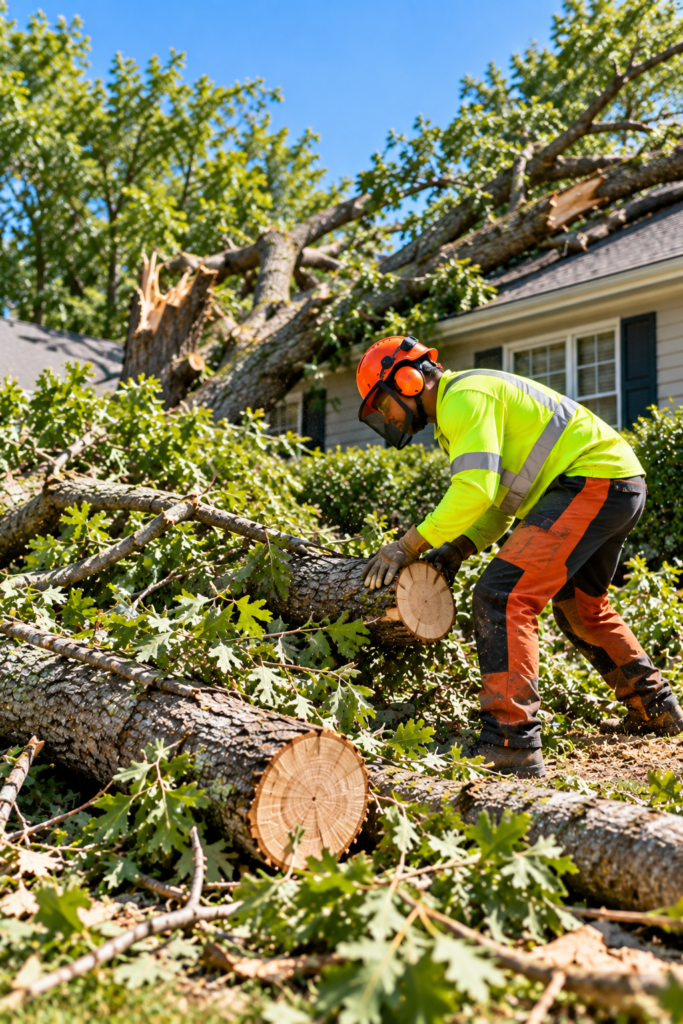
Branch work is often the most visible part of tree maintenance. Pruning focuses on selective cuts for a tree’s structure and health, especially on young trees and trees with problem branches. Tree trimming focuses on practical goals like clearance over roofs, driveways and walkways.
Good branch work removes only what’s needed. Topping, which cuts a tree’s top back to stubs, is widely discouraged because it weakens trees and creates new problems.
Monitoring Tree Health and Condition
A lot of maintenance is simply paying attention. Changes worth noticing from season to season include thinner or smaller leaves, early fall color, spreading dieback, new cracks, fungal growth at the base, or a lean that seems to be changing.
When something looks off, a tree inspection can review the tree’s visible condition and structure, and a tree health assessment looks more closely at signs of stress or decline. Either can help decide whether any work is needed.

How Often Do Trees Need Maintenance?
There’s no single schedule that fits every tree. How often a tree benefits from attention can depend on:
- Its age, size and overall condition
- How quickly it grows
- How close it is to structures, lines or busy areas
- What care it has had in the past
- Your goals, such as clearance, appearance or long-term health
Some trees benefit from regular attention, while others need little beyond a look after major storms. Work should be done because a tree needs it, not just to fill a calendar.
Maintaining Mature Trees and Trees Around Homes and Businesses
Mature trees often need less frequent work than young ones, but what they do need tends to matter more: removing deadwood, managing heavy limbs and keeping an eye on structure as they age. Because established trees can be slow to recover from heavy cuts, work on them is usually more targeted.
The Missouri Department of Conservation’s guide to established tree care covers ongoing care for Missouri trees, including a timetable for watering, mulching, pest monitoring and pruning, along with advice on avoiding topping and protecting roots.
For homes and businesses, maintenance often centers on the areas people use: clearance over roofs and walkways, branches over parking areas, and trees near entrances, signs or lights.
Seasonal and After-Storm Care
Checking trees after storms
After significant wind or ice, look over your trees from a safe distance for broken or hanging branches, split limbs, a new lean or lifted soil. Stay out from under damaged branches until they’ve been dealt with.
Protecting the root area
Roots are easy to overlook. Soil compaction from vehicles or equipment, piling soil or fill over roots, and trenching or construction nearby can all affect a tree’s health, sometimes years later. Keeping heavy traffic and construction away from the root area is a simple but important part of long-term care.
Safety
Keep the maintenance you do yourself to observation and light yard care. Work involving chainsaws, ladders in trees, climbing or large branches should be left to trained crews. If a tree or branch is touching a power line, stay clear and don’t touch the tree, branch or line. Liberty Utilities, which provides electric service in the Joplin area, directs customers to call 911 and Liberty at 1-800-206-2300 about downed lines.
When More Than Routine Care Is Needed
Sometimes a tree needs more than routine attention: a large crack, a sudden lean, significant storm damage, or a tree over a home with defects that raise safety questions. A tree risk assessment can help weigh those concerns against what the tree could affect.
See the full range of our tree services in Joplin.
Tree Maintenance FAQs
It can include periodic checks, removing dead or damaged branches, pruning or trimming as needed, monitoring health and condition, checking trees after storms and protecting the root area. The mix depends on the tree.
It depends on the tree’s age, condition, growth rate, location and past care, and on your goals. There’s no single schedule that fits every tree.
No. Trimming is one part of maintenance. Maintenance is the broader, ongoing care that can also include pruning, monitoring, inspections and after-storm checks.
It can. Regular attention makes it more likely that dead branches, structural changes or signs of stress are noticed sooner, although it can’t prevent or reveal every problem.
They often need less frequent but more targeted care, such as removing deadwood, managing heavy limbs and watching for changes in structure as they age.
Yes, once it’s safe. Look from a distance for broken or hanging branches, splits, a new lean or lifted soil, and keep clear of damaged limbs.
When you notice a large crack, a sudden or increasing lean, significant storm damage, or defects in a tree over a home or busy area. Those situations may call for an inspection or risk assessment.
Want a Maintenance Plan That Fits Your Trees?
Call to talk through your trees, what they need and what you’d like from them.
Get Quick Estimate
Copyright 2024 | All RIghts Reserved