- (417) 674-4531
- info@treeservicejoplinmo.com
- Mon - Fri: 9:00 - 18:30
BRANCH CLEARANCE & DEADWOOD TRIMMING
Tree Trimming in Joplin, MO
Tree trimming keeps a healthy tree in place while dealing with the branches that cause problems: limbs hanging over a roof, low branches over a driveway or sidewalk, dead wood in the canopy, or growth crowding a house, fence or streetlight.
On Joplin properties, trimming out dead and weak branches can also help reduce what a spring storm brings down. If some of your trees are getting too close for comfort, call to talk through what you’d like trimmed and arrange an estimate.

What Tree Trimming Includes
Trimming works on selected branches, and the tree stays. Depending on the tree and what you want to achieve, a trimming visit may include:
- Clearance trimming. Cutting back limbs growing over or against a roof, gutters, siding, fences or outbuildings.
- Deadwood removal. Taking out dead, broken or hanging branches from the canopy.
- Raising the canopy. Removing lower limbs that block a driveway, sidewalk, mower or view.
- Light shaping. Evening out lopsided or overgrown growth so the tree looks tidier.
- Branch cleanup. Chipping or hauling trimmed branches, if it’s part of the agreed scope.
Trimming can cover a single yard tree or trees across a whole residential or commercial property.
Signs Your Trees May Need Trimming
Most trees don’t need trimming on a fixed schedule. These are common reasons property owners call:
- Branches touching or hanging over the roof, or filling gutters with debris
- Limbs rubbing against each other, the house or a fence
- Low branches that catch vehicles, mowers or people on the sidewalk
- Dead or leafless branches in the canopy, especially above walkways or parking areas
- A broken or hanging limb left after a storm
- Growth blocking a streetlight, security light, camera or sign
A large dead section, cracks in the trunk, or a tree that has started to lean may point to more than a trimming job. In those cases the tree itself may need a closer look.
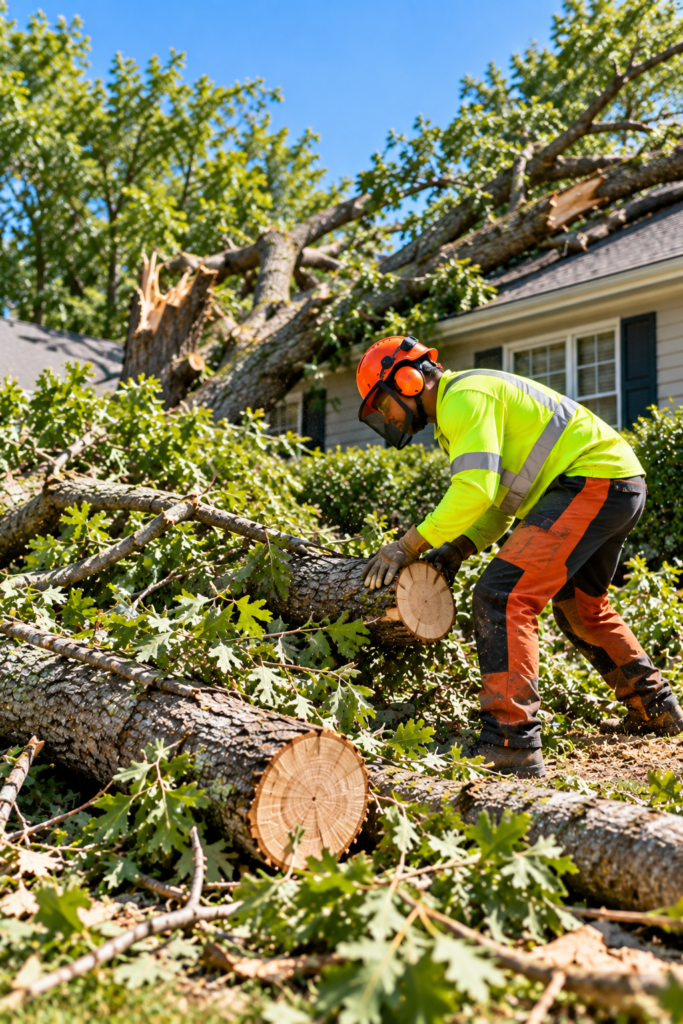

Trimming vs. Pruning vs. Removal
These terms often get used interchangeably, but they describe different work:
- Tree trimming, covered on this page, focuses on practical results: clearance, cleaning out dead branches, and keeping trees neat around homes, driveways and buildings.
- Tree pruning is more selective, with cuts chosen mainly to guide a tree’s structure and long-term health, often starting when trees are young.
- Tree removal takes the whole tree down when trimming won’t solve the problem.
Many jobs involve a little of each. Describe what’s bothering you about the tree, and the right approach can be discussed.
When to Trim Trees in Joplin
University of Missouri Extension recommends doing most pruning while trees are dormant, and notes that cuts made in early spring, before trees leaf out, close over faster. It suggests waiting until late spring for species such as maples and birches, which tend to bleed sap when cut earlier.
Some trimming shouldn’t wait for the ideal season:
- Broken or hanging branches after a storm
- Limbs rubbing on a roof or siding
- Branches blocking a driveway, sidewalk or sightline
Light corrective trimming can generally be done during the growing season, while heavier cuts are usually better planned for the dormant months.

What Affects a Tree Trimming Estimate
Trimming prices aren’t one-size-fits-all, and an accurate estimate usually depends on seeing the trees. Common factors include:
- How many trees need trimming, and how tall they are
- How much deadwood or overgrowth there is
- Whether branches hang over a roof, fence or other structure and need to be lowered carefully
- Access for equipment, such as narrow gates, slopes or backyards without vehicle access
- Nearby utility lines
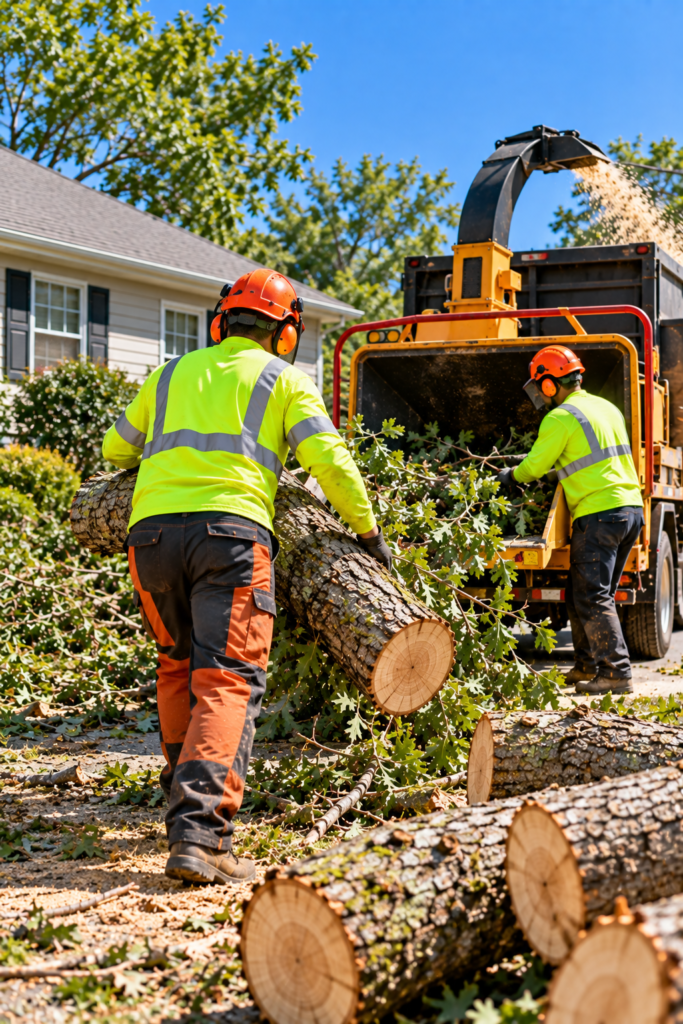
- Whether you want branches chipped and hauled away or left on site
It helps to walk the property and point out exactly what you want addressed, so the scope and the estimate match.
Good Trimming Practices
How a branch is cut matters as much as which branch is cut. MU Extension’s guide to pruning and care of shade trees highlights a few principles worth knowing before any work begins:
- Cut at the branch collar. Cutting flush against the trunk damages the collar and interferes with the tree’s ability to seal the wound.
- Avoid topping. Cutting a tree’s top back to stubs is not recommended. Reducing size by cutting back to a side branch or the trunk is the better alternative.
- Don’t overdo it. Taking too much live canopy at once can stress a tree, so heavier work on mature trees may be spread over more than one year.
- Skip the wound paint. Wound dressings have little or no effect on how cuts close.
Tree Trimming Considerations in Joplin
Storms, wind and ice
Spring thunderstorms, strong winds and occasional ice put heavy loads on branches in southwest Missouri. Dead, cracked or overextended limbs are often the first to break. Trimming them out ahead of storm season can reduce how much comes down, though no amount of trimming makes a tree storm-proof.
Branches near power lines
Never trim branches near power lines yourself. Liberty Utilities, which provides electric service in the Joplin area, says it maintains the lines running between poles, while vegetation around the service line from the pole to your house is the homeowner’s responsibility. Liberty also says it will disconnect that service line so tree work can be done safely if you contact it ahead of time. Check with the utility for its current process before scheduling work near a line.
Trees along the street
Trees in the street right-of-way, the strip between the sidewalk and the street, can fall under City of Joplin oversight. The City’s Code Enforcement office handles questions about right-of-way trees, and the City can require pruning or removal of dead or hazardous trees on private property. If a tree you want trimmed stands near the street, confirm with the City first.
Related Services
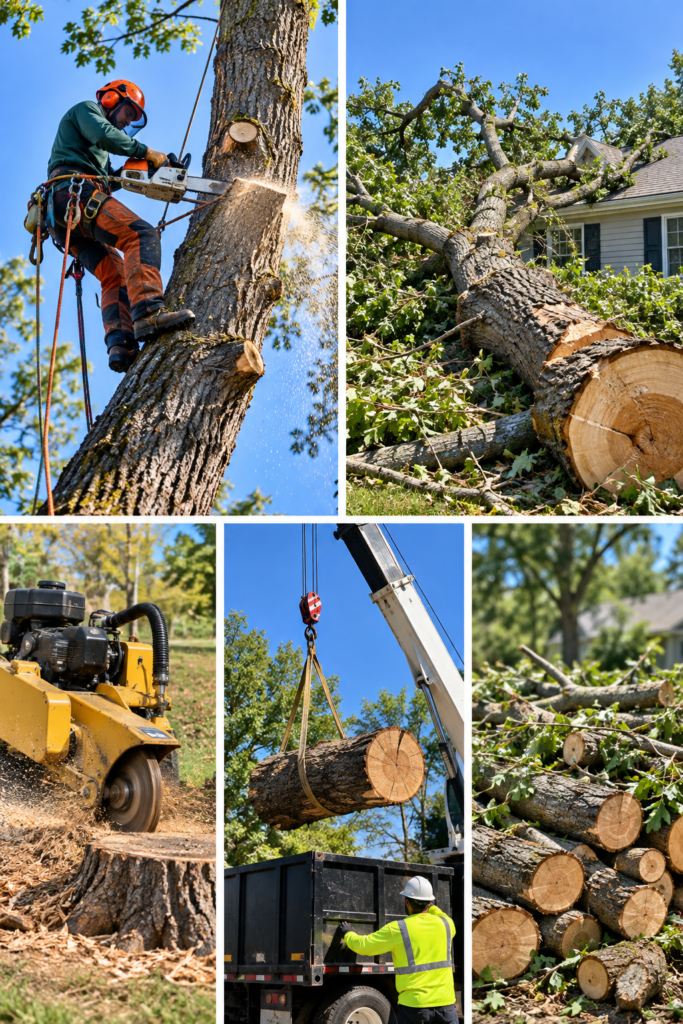
If trimming won’t solve the problem, for example when a tree is dead, badly split or leaning toward a building, tree removal may be the next conversation. A tree or large limb that has already fallen or is threatening a structure after a storm calls for emergency tree work rather than routine trimming. And if a stump is left from an earlier removal, stump grinding can clear it.
Learn more about our tree services in Joplin.
Tree Trimming FAQs
There’s no single schedule. Young trees benefit from attention in their first few years, while established trees usually need trimming only occasionally, when dead branches appear or limbs start crowding a roof, driveway or line.
For most trees, late winter to early spring while they are dormant. Maples and birches are often better trimmed in late spring to limit sap bleeding. Broken or hanging branches should be dealt with whenever they occur.
It depends on the tree’s age, species and health. Removing too much live canopy in one visit can stress a tree, so larger reductions are often spread over time.
Branches near power lines need the utility or qualified line-clearance workers. Contact Liberty Utilities about limbs near the lines between poles, and ask about disconnecting the service line to your home before any nearby work.
No. University of Missouri Extension advises against topping. Cutting back to a side branch or the trunk reduces size with less damage to the tree.
That depends on the agreed scope. Branches can be chipped and hauled away, cut to length, or left on site. Mention your preference when you ask for an estimate.
Need Branches Trimmed?
Call to describe the trees and what you’d like trimmed, and request a tree trimming estimate.
Get Quick Estimate
Copyright 2024 | All RIghts Reserved