- (417) 674-4531
- info@treeservicejoplinmo.com
- Mon - Fri: 9:00 - 18:30
UNDERSTANDING WHAT A TREE COULD AFFECT
Tree Risk Assessment in Joplin, MO
A cracked limb over an empty field and the same limb over your driveway are very different situations. A tree risk assessment looks at a tree’s visible condition alongside what’s around it, so you can understand where concerns lie and what, if anything, may be worth doing about them.
If you have a tree near your Joplin home, driveway or a busy part of your yard that you’re unsure about, call to describe it and arrange a tree risk assessment.

When Should You Consider a Tree Risk Assessment?
- A large tree or major limbs hang over a house, garage, driveway or play area
- A storm has left broken branches, cracks or a changed lean
- You’ve noticed dead limbs, splits or other structural changes
- Construction, trenching or grading has disturbed the root area
- You’re planning a patio, parking area or play space under or near a tree
- You want a clearer picture before deciding on pruning or removal
What Factors Can Affect Tree Risk?
Tree risk isn’t only about the tree. It generally comes down to a few questions considered together:
- Condition: Are there visible defects in the trunk, branches or root area?
- Potential for failure: How likely does it seem that a branch or the tree could fail?
- Targets: What people or property are within reach if it did?
- Consequences: How serious would it be, given the size of what could fall and what it could hit?
Forest Service guidance on tree hazards makes the same point: a defect becomes a real concern when something is within striking distance. The USDA Forest Service’s guide to urban tree risk management was written to help communities and tree care practitioners detect, assess and correct hazardous defects in trees.

Structural Conditions That May Deserve Attention
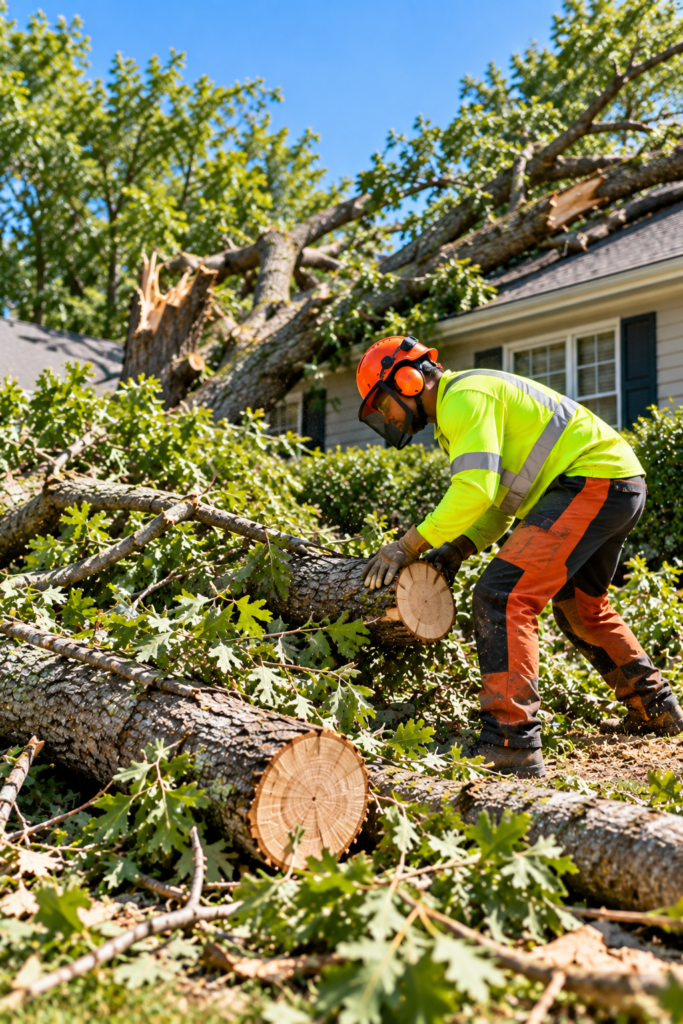
- Dead branches, or broken branches still hanging in the canopy
- Cracks or splits in the trunk or major limbs
- Tight branch unions where two stems grow closely together
- Cavities, soft wood or fungal growth that may be associated with decay
- A lean that is new or getting worse
- Roots that have been cut, crushed or exposed
A visible defect doesn’t automatically mean a tree or branch will fail. Some trees carry defects for many years. What matters is how serious the defect appears, whether several concerns occur together, and what lies within reach.
Trees Near Homes, Driveways and Used Areas
The same tree can present very different levels of concern depending on where it stands. Potential targets include houses, garages and sheds, parked vehicles, driveways and walkways, patios, play areas and other places where people spend time.
How often an area is used matters too. A branch over a driveway used every day or a backyard play set deserves more attention than one over a rarely visited corner of the property. Reviewing what’s within reach of a tree is a central part of any risk assessment.

Tree Risk After Storm Damage
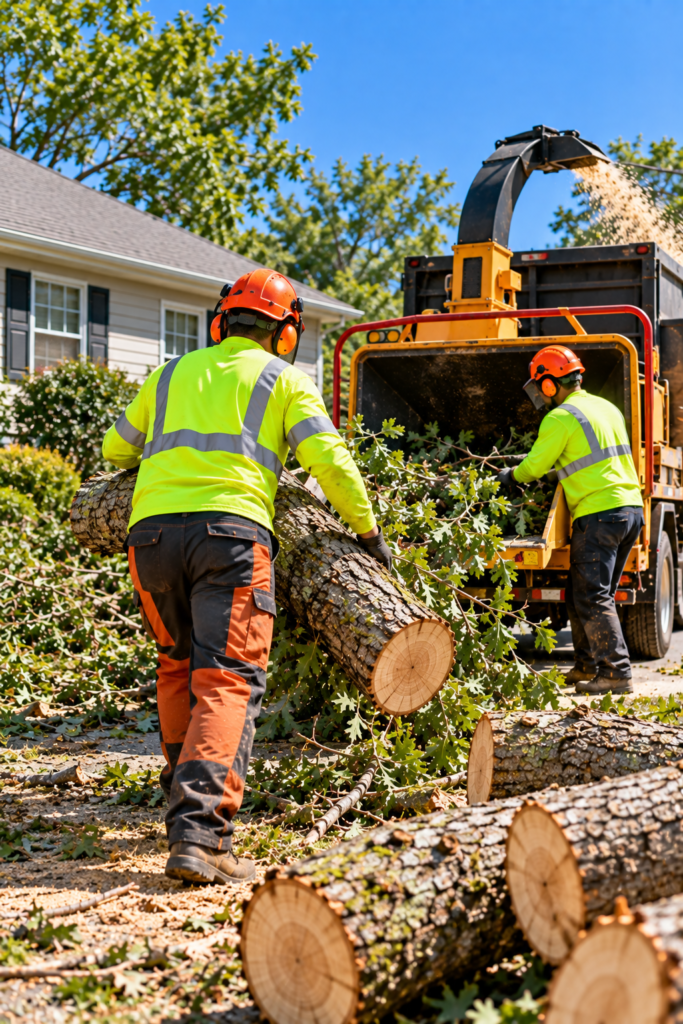
Storms can change a tree’s condition quickly. Afterward, look from a safe distance for broken or hanging branches, new cracks, a lean that has shifted, or soil lifted at the base.
Keep people and vehicles away from anything that looks unstable. Damage that appears minor from the ground can still deserve a closer look when the tree stands over a home or driveway.
Does a Tree Risk Concern Always Mean Removal?
No. Identifying a concern is the start of a decision, not the decision itself. Depending on the situation, ways to reduce tree-related risk may include:
- Moving what’s at risk, such as a play set, picnic table or parking spot
- Pruning to remove a dead, broken or poorly attached branch when the rest of the tree is sound
- Cabling or bracing to add supplemental support to a weak branch union, in trees that are otherwise suitable candidates
- Monitoring a concern over time when it doesn’t call for immediate action
- Removal when the situation justifies it, through hazardous tree removal or planned tree removal
No option removes all risk, since trees are living things in a changing environment. The goal is to reduce it to a level that makes sense for how the area is used.
How Risk Assessment Differs, and Staying Safe
Tree risk assessment vs. tree inspection
A tree inspection looks broadly at a tree’s visible condition and structure. A risk assessment builds on that by weighing those conditions against what could be affected if something failed.
Tree risk assessment vs. tree health assessment
A tree health assessment focuses on vitality and signs of stress or decline. A tree can look healthy and still have structural concerns, and a stressed tree isn’t necessarily a high-risk one, so the two look at different questions.
Staying safe in the meantime
Keep clear of trees or branches that appear immediately unstable, and don’t climb, cut or try to test the tree. If a tree or branch is touching a power line, stay away and don’t touch the tree, branch or line. Liberty Utilities, which provides electric service in the Joplin area, directs customers to call 911 and Liberty at 1-800-206-2300 about downed lines.
Related Tree Services
A risk assessment often leads to practical next steps, from pruning a single branch to removing a tree that can’t be made safe. See the full range of our tree services in Joplin.
Tree Risk Assessment FAQs
It’s an evaluation of potential tree-related concerns: the visible condition of a tree or branch, how likely it may be to fail, and what people or property could be affected if it did.
When a tree stands over a home, driveway or busy area and you notice dead or broken branches, cracks, a changing lean or root disturbance, or after storm damage.
No. Many trees lean and remain stable. What matters is whether the lean is new or increasing, especially with soil movement at the base, and what the tree could hit.
Yes. A full, green canopy doesn’t rule out cracks, decay or weak branch unions, which is why structure and surroundings are considered separately from overall health.
No. Many concerns can be addressed by pruning, moving what’s at risk or monitoring. Removal is one option when the situation justifies it.
Often, yes. When a concern is limited to a specific branch and the rest of the tree is sound, removing that branch may reduce the risk.
It’s a good idea, especially if the tree stands near a home or driveway. Look from a safe distance first and keep clear of anything that appears unstable.
Concerned About What a Tree Could Hit?
Call to describe the tree and what’s around it, and arrange a tree risk assessment.
Get Quick Estimate
Copyright 2024 | All RIghts Reserved