- (417) 674-4531
- info@treeservicejoplinmo.com
- Mon - Fri: 9:00 - 18:30
SELECTIVE PRUNING FOR HEALTHIER, STRONGER TREES
Tree Pruning in Joplin, MO
Tree pruning is the selective removal of specific branches for a clear reason: taking out dead or damaged limbs, correcting weak structure, improving canopy health, or guiding how a tree grows. Done well, it helps a tree stay stronger and better shaped over the years, not just tidier for a season.
Whether you have a young shade tree that needs a good start or a mature tree with problem limbs, call to talk through what you’ve noticed and arrange a pruning estimate.

Why Trees Need Pruning
Every pruning cut should have a purpose. Common reasons include:
- Tree health. Removing dead, dying or diseased branches can help limit decay and keeps the canopy healthier.
- Structure. Selective cuts can correct competing leaders, weak branch unions and uneven weight before they become bigger problems.
- Safety. Damaged limbs over a driveway, patio or roof may warrant removal before they fall.
- Growth management. Reducing specific branches can steer growth away from a house, window or line while keeping the tree’s natural form.
- Clearance. Raising lower limbs gives appropriate room for people, vehicles and light.
Good pruning removes only what is needed. Leaves are how a tree makes its food, so taking off more live wood than necessary works against it.
Dead, Damaged and Problem Branches
Some branches are worth addressing even on an otherwise healthy tree:
- Dead or broken limbs, including branches cracked or torn by wind or ice
- Crossing and rubbing branches that wear through bark where they touch
- Narrow, tight branch unions, which tend to be weaker than wide-angled attachments
- Competing leaders, where two main stems grow upward side by side
- Water sprouts and suckers, fast vertical shoots from branches or the base of the trunk
Not every problem branch means the tree is in trouble. A single broken limb can usually be pruned back cleanly. Extensive damage is a different conversation, covered further down this page.

Pruning for Structure and Canopy Health
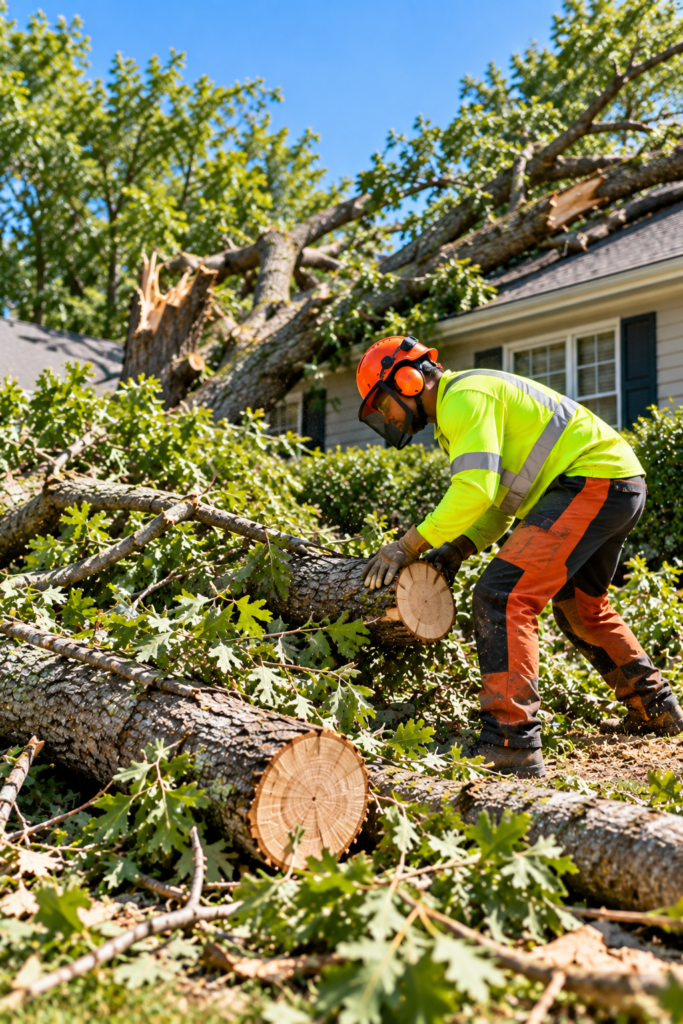
How a branch is removed matters as much as which branch is chosen. Sound pruning generally means:
- Cutting just outside the branch collar, the slightly swollen area where a branch meets the trunk, rather than flush against it
- Removing heavy limbs in stages so their weight doesn’t tear bark down the trunk
- Thinning selectively instead of shearing the outside of the canopy
- Reducing size by cutting back to a side branch, not by topping the tree to stubs
- Limiting how much live canopy comes off at once, spreading larger corrections over more than one season when needed
The goal is a canopy with well-spaced branches, a sound central structure and fewer weak points.
Pruning Young Trees vs. Mature Trees
Young trees benefit most from structural pruning. A few careful cuts in the first years after planting, such as keeping one central leader and spacing out the main branches, can prevent problems that would take major cuts to fix later.
Mature trees usually need less, and more targeted, work. Pruning typically focuses on dead and damaged wood, specific structural concerns and clearance over structures. Because established trees have less capacity to recover from heavy cuts, removing large live limbs is something to weigh carefully.

What Affects a Pruning Project
Every pruning job is scoped around the tree and your goals, so an accurate estimate usually depends on seeing it. Factors include:
- The size and height of the tree
- What the pruning needs to achieve, whether deadwood removal, structural correction or clearance
- How many branches or trees are involved
- The species and timing, since some trees are best pruned in certain seasons
- Access around buildings, fences and slopes, and whether lines are nearby
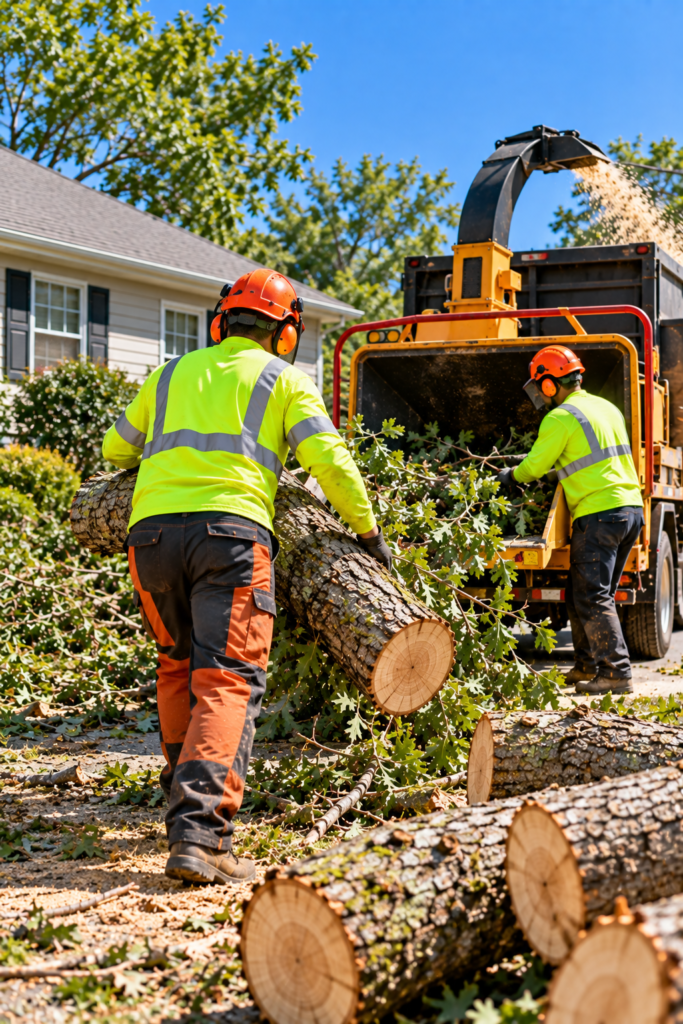
- Whether branches are chipped and hauled away or left on site
Pointing out the specific limbs or concerns you’ve noticed helps define a scope and estimate that match what you expect.
Pruning, Trimming or Removal?
Pruning and trimming overlap, but the emphasis differs. Tree trimming focuses on practical results like clearance around roofs and driveways and keeping trees neat. Pruning centers on the tree itself: its structure, its health and how it will grow over the coming years.
Sometimes pruning isn’t enough. If a tree has a split trunk, large dead sections, serious decay, or has lost much of its canopy, the question may shift to whether the tree can be kept at all. In those cases tree removal may need evaluation, and a look at the whole tree is the best starting point.
Pruning Considerations in Joplin
Pruning oaks and oak wilt
Oaks need extra care with timing in Missouri. The Missouri Department of Conservation’s oak wilt guidance advises against pruning or wounding oaks from mid-March through June, when sap-feeding beetles can carry the oak wilt fungus to fresh wounds. If an oak is damaged in that window, MDC recommends applying a tree wound dressing to fresh wounds right away. Scheduling oak pruning outside that period is the simplest way around the risk.
After storms
Wind and ice in southwest Missouri can leave trees with broken, cracked or hanging limbs. Pruning damaged branches back to a sound point removes loose wood and leaves cleaner wounds for the tree to close. If much of the crown is lost or the trunk is split, it’s worth evaluating the whole tree before investing in pruning.
Street trees and power lines
Trees in the street right-of-way can fall under City of Joplin oversight, so check with the City’s Code Enforcement office before work on a tree near the street. Branches near power lines should be left to the utility or qualified line-clearance workers. Never prune near a line yourself.
Related Services
Pruning often fits alongside other work. Clearance-focused trimming, removal of trees that can’t be saved, stump grinding and help after storms are all part of our tree services in Joplin.
If you’re not sure which a tree needs, describe what you’re seeing and it can be sorted out from there.
Tree Pruning FAQs
They overlap, but pruning focuses on selective cuts for a tree’s health and structure, while trimming usually focuses on clearance and appearance. Many jobs include a bit of both.
For most trees, the dormant season from late fall to early spring works well. Maples and birches are often pruned in late spring to limit sap flow, and oaks shouldn’t be pruned from mid-March through June because of oak wilt. Dead or broken branches can be removed any time.
Often, if the tree is otherwise healthy and the damage is limited. Pruning broken limbs back cleanly supports recovery. A split trunk or the loss of most of the canopy may mean the tree needs a closer evaluation.
It depends on the tree’s age, species and health, but less is usually better. Removing too much live canopy at one time stresses a tree, so major corrections are often spread over several seasons.
Generally no. University of Missouri Extension notes that wound dressings have little or no effect on how cuts close. The main exception is oaks: MDC recommends dressing fresh oak wounds made during the spring oak wilt period.
Young trees benefit the most. Light structural pruning in the first few years can set up a strong central leader and well-spaced branches, avoiding larger cuts later.
Have a Tree That Needs Pruning?
Call to describe the tree and the branches you’re concerned about, and request a tree pruning estimate.
Get Quick Estimate
Copyright 2024 | All RIghts Reserved