- (417) 674-4531
- info@treeservicejoplinmo.com
- Mon - Fri: 9:00 - 18:30
BRANCH, LIMB AND TREE CUTTING
Tree Cutting Service in Joplin, MO
Most tree problems come down to something that needs to be cut: an overgrown limb over the roof, a broken branch hanging above the driveway, or sometimes the whole tree. A professional tree cutting service handles that work in a controlled way, cutting only what the situation calls for and protecting the property around it.
If you have branches or a tree in Joplin that need cutting, call to describe what you’re seeing and arrange an estimate.

What Professional Tree Cutting Includes
“Tree cutting” covers a range of work, from a single limb to an entire tree. Depending on the situation, it can include:
- Limb removal of individual branches that are dead, damaged or in the way
- Cutting back overgrown branches that have spread over a roof, driveway or patio
- Taking down large limbs in controlled pieces when they hang over structures
- Cutting up fallen limbs or trunks after wind or storms
- Cutting down a whole tree when the tree itself can’t stay
The goal is to cut what needs cutting and nothing more, so healthy trees keep as much of their canopy as possible.
When Tree Cutting May Be Needed
- Limbs resting on or hanging over a roof, gutters or chimney
- Branches blocking a driveway, sidewalk, sign or security light
- Broken or cracked limbs left in the canopy after wind
- Dead limbs above patios, walkways or play areas
- Branches rubbing against siding, fences or outbuildings
- Trees or limbs in the way of a new addition, fence or driveway
A single symptom doesn’t always mean a tree has a serious problem. Sometimes one limb is the whole issue; sometimes it’s a sign the tree deserves a closer look.

Cutting Damaged, Broken and Overgrown Limbs
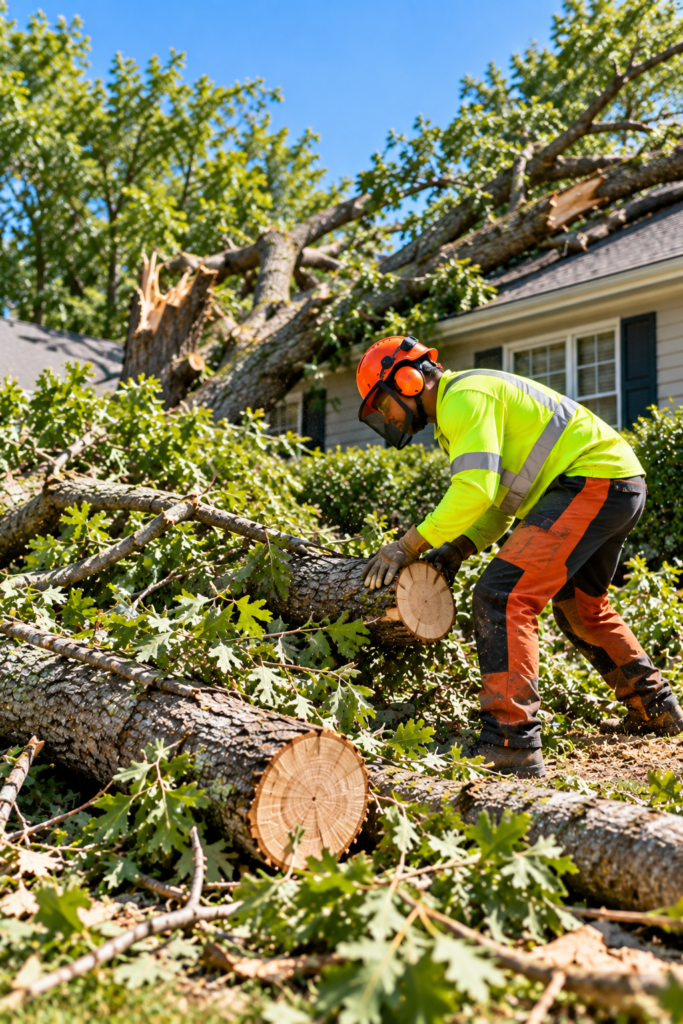
Damaged branches are usually cut back to sound wood, at a point where the tree can close the wound. Overgrown limbs are shortened or removed so they stop crowding a structure while leaving the tree’s overall shape intact.
Large limbs deserve particular care. A heavy branch over a roof or fence has to come down in a controlled way, and limbs that are split, bent or hung up in other branches may be holding tension that isn’t obvious from the ground. That’s work for experienced crews, not something to attempt from a ladder.
Tree Cutting vs. Trimming vs. Pruning
These terms overlap, and many people use them interchangeably. Here’s how they differ:
- Tree cutting is the broad term for any work that cuts branches, limbs or a whole tree, usually to solve a specific problem.
- Tree trimming focuses on clearance and keeping trees neat around homes, driveways and buildings.
- Pruning uses selective cuts chosen mainly for a tree’s structure and long-term health.
A cutting job may include a little of each. What matters is that every cut has a clear reason.

What Affects Tree Cutting Work
No two cutting jobs are the same, so an accurate estimate usually depends on seeing the tree. Factors include:
- How large and how high the limbs are
- What’s underneath, such as a roof, fence, vehicle or garden
- Power lines near the work area
- Access for equipment, including gates, slopes and backyards
- How many limbs or trees need cutting
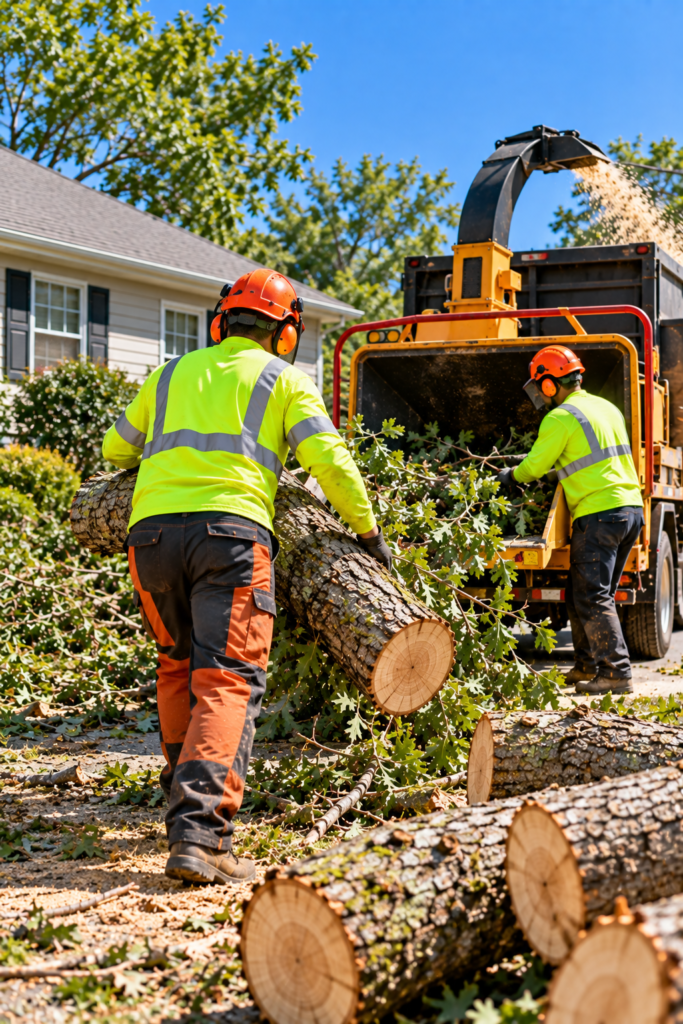
- Whether wood and branches are hauled away, chipped or left on site
When Tree Cutting Becomes Tree Removal
Cutting individual limbs keeps a tree in place, and sometimes that isn’t enough. If the trunk is split, much of the crown is dead or broken, the roots have lifted, or the tree leans heavily toward a structure, cutting more limbs may only delay the problem.
In those situations, full tree removal may need to be evaluated. An assessment of the whole tree, rather than just the limb that caught your attention, helps decide whether cutting or removal makes more sense.
Tree Cutting Considerations in Joplin
Trees near homes and structures
Trees growing close to houses, garages and fences need extra planning when limbs are cut. Branches over a roof or next to siding are usually lowered in smaller pieces, and the work area is set up to protect structures, landscaping and vehicles. Pointing out anything fragile nearby, such as skylights, gutters or garden beds, helps with planning.
Storm-damaged branches
After wind or ice, broken and hanging limbs are common. University of Missouri Extension’s guide to storm-damaged trees cautions that bent and twisted branches can be under strain that’s hard to see, and recommends leaving branches more than about six inches thick to experienced professionals. It also notes that trees keeping at least half of their crown often recover, so storm damage doesn’t automatically mean removal, and it urges caution with door-to-door workers after storms. If a limb is on your house or blocking access, emergency tree service is the better starting point.
Branches near power lines
Never cut branches that are touching or near power lines. Keep everyone clear and treat any downed line as energized. Liberty Utilities, which provides electric service in the Joplin area, directs customers to call 911 and Liberty at 1-800-206-2300 about downed lines. Tree cutting near the lines should wait until the utility has made them safe.
Related Tree Services
Cutting often leads to other work: grinding the stump after a tree comes down, clearing storm debris, or planning ongoing care for trees you want to keep healthy. See the full range of our tree services in Joplin.
Tree Cutting FAQs
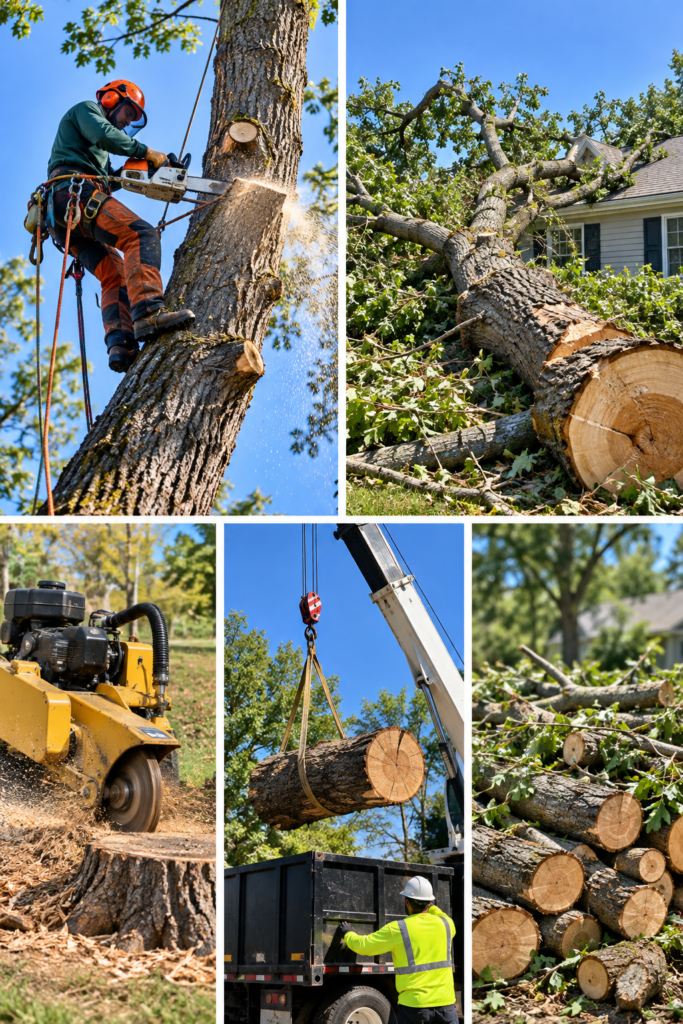
It can include cutting individual limbs, shortening overgrown branches, taking down damaged limbs in pieces, cutting up fallen wood, and cutting down a whole tree when needed. The scope depends on what the tree and property require.
Not exactly. Tree cutting is a broad term for any branch, limb or tree cutting. Trimming is one type, focused on clearance and keeping trees neat.
Pruning is a more selective form of cutting, with each cut chosen mainly for a tree’s structure and health. General tree cutting may be done for clearance, damage or other practical reasons.
Removal may be considered when the trunk is split, much of the crown is dead or broken, the roots have failed, or the tree leans heavily toward a structure. An assessment of the whole tree helps decide.
Often, yes. If the trunk and roots are sound and most of the canopy is intact, cutting damaged limbs back to healthy wood may be all that’s needed.
Yes. Gates, slopes, fences, structures and nearby lines all affect how limbs can be lowered and what equipment can reach the tree.
Stay out from under it and keep others away. Don’t try to pull it down or cut it yourself, especially if it’s hung up or near power lines. If lines are involved, call 911 and the utility first, then call for tree help.
Have Limbs or a Tree That Need Cutting?
Call to describe the branches or tree and request a tree cutting estimate.
Get Quick Estimate
Copyright 2024 | All RIghts Reserved