- (417) 674-4531
- info@treeservicejoplinmo.com
- Mon - Fri: 9:00 - 18:30
PLANNED WHOLE-TREE REMOVAL
Tree Removal in Joplin, MO
If a tree on your property has died, suffered serious structural damage, or is standing where it can no longer stay, removing it may be the most practical option. Tree removal means taking down the entire tree in a planned way, then handling the wood and debris as agreed.
In Joplin, owners often start thinking about removal after a storm leaves a tree split or broken, when a tree is crowding a house or driveway, or when a project needs the space. Not every problem tree has to come down, so the first step is looking at the specific tree and what’s around it.

What Tree Removal Involves
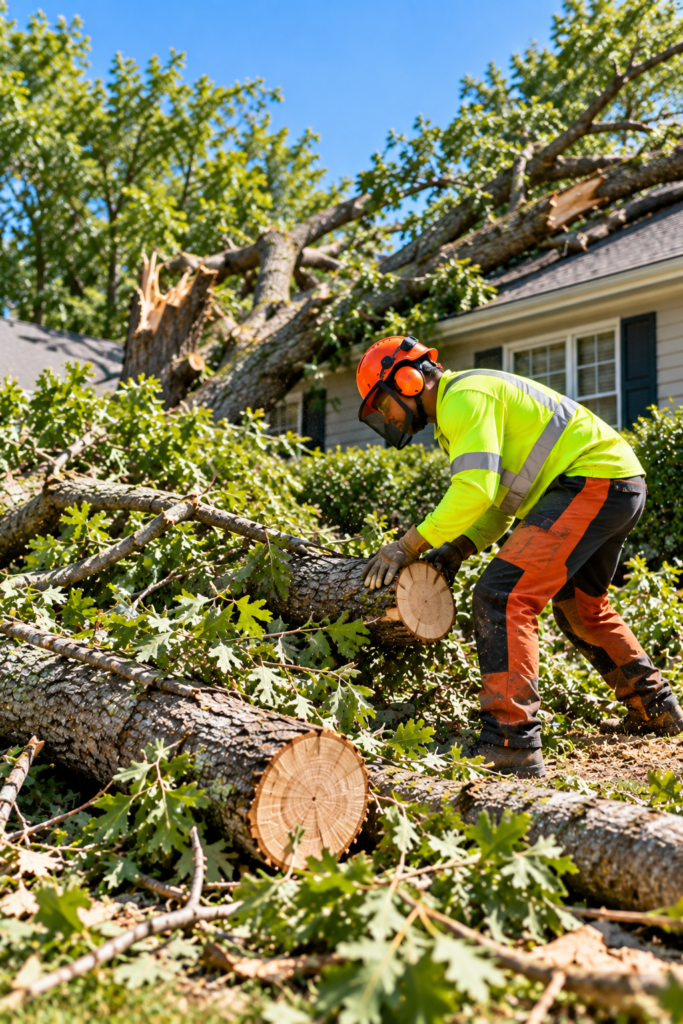
Removal takes out the whole tree, not just selected branches. With open space, a tree may come down in one piece. Close to a home, fence or overhead line, it is usually taken down in smaller sections so each piece can be controlled.
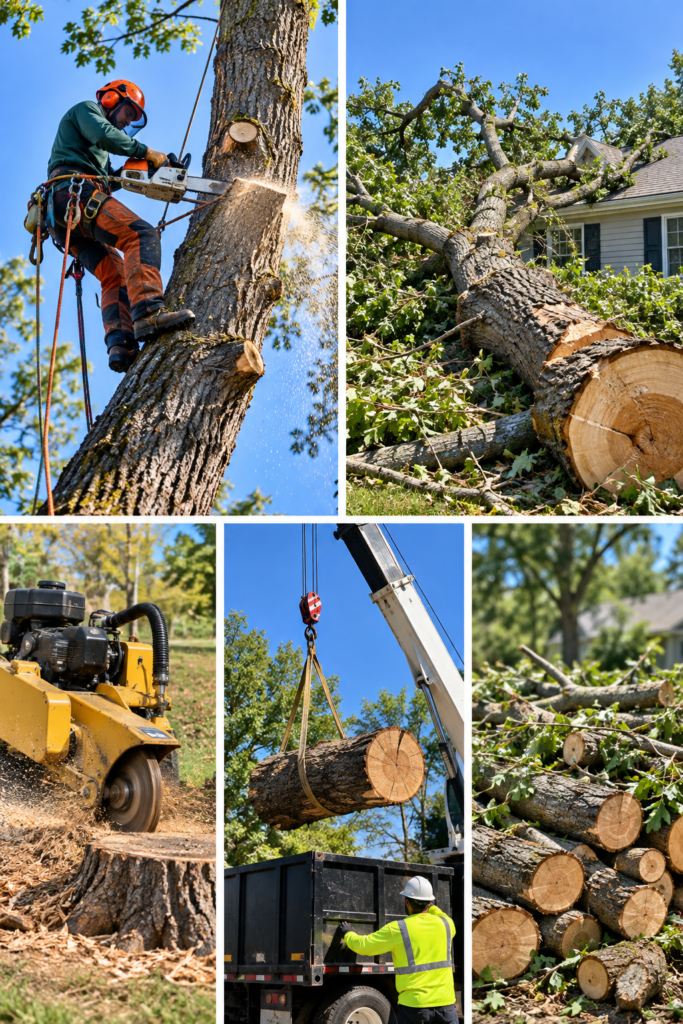
A typical tree removal service includes:
- Assessing the tree and the area around it
- Planning where branches and wood will be lowered or dropped
- Cutting and taking down the tree
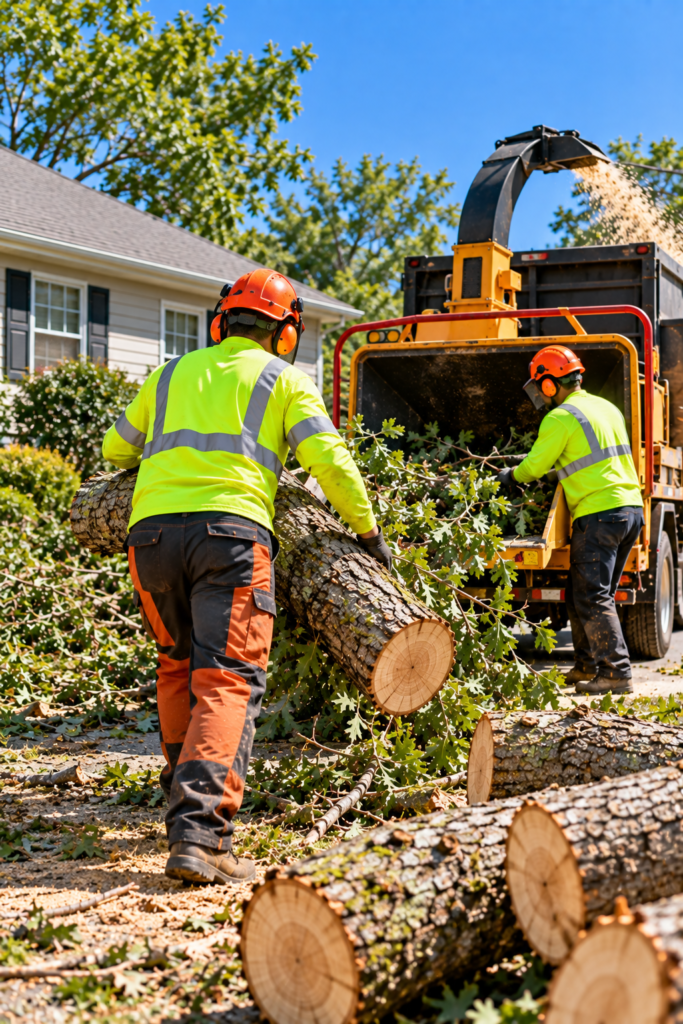
- Debris removal, based on the agreed scope
- Leaving the stump, or grinding it if stump work is included
This applies to residential and commercial properties alike, from one backyard tree to several trees cleared for construction.
When Tree Removal May Be Appropriate
Some signs may warrant evaluation, but no single sign proves a tree must come down. It depends on the tree and the circumstances.
- Dead or severely declining trees. Little healthy leaf growth across much of the canopy may indicate serious decline. A few dead branches don’t mean the whole tree is dead.
- Major structural damage. A split trunk, large cracks or the loss of several main limbs can be associated with a tree that is unlikely to recover.
- Storm-affected trees. Many recover with proper pruning; removal may be considered when damage is extensive.
- Trees too close to structures. When a trunk or major limbs press against a roof, wall or foundation and pruning won’t solve it, removal may be the better long-term choice.
- Planned property use. A new driveway, addition or fence may mean removing unwanted trees from the work area.
- A changing lean. Many trees lean naturally. A new lean, lifting soil or newly exposed roots may indicate a concern worth having looked at.

Tree Removal vs. Other Tree Services
This page covers general, planned removal: a tree you’re considering taking out, where the work can be scheduled rather than rushed. Related services cover different needs:
- Trimming and pruning remove selected branches. The tree stays.
- Emergency removal is urgent work when a tree has fallen or threatens a home or road right now.
- Hazardous removal is for trees with identified serious defects near people or property.
- Dead tree removal deals with trees that have died, whose dry wood can behave differently when cut.
- Large tree removal involves very tall or wide trees needing more rigging and space.
- Storm damage removal focuses on trees broken or uprooted by wind and storms.
- Brush clearing deals with overgrown brush, undergrowth and small woody growth rather than whole trees.
Not sure which fits? Describe the tree when you call.
Factors That Affect a Tree Removal Project
Two trees of the same height can be very different jobs. Common factors include:
- Size and condition. Larger trees mean more wood to handle, and decayed or cracked wood may need extra care.
- Nearby structures. Buildings, fences, driveways and landscaping affect how a tree can come down.
- Utility lines. Work near power lines may require coordination with the utility. Never cut branches near a line yourself.
- Access and terrain. Narrow gates, backyards without vehicle access, slopes and soft ground change the approach and equipment needed.
- Number of trees. Several trees are planned differently from a single removal.
- Debris and stump work. Hauling wood away and grinding the stump both change the scope.

Tree Removal Cost: What Affects an Estimate
There’s no one-size price, and a figure given without seeing the tree is a guess. An estimate usually reflects the factors that affect tree removal cost: the tree’s size and condition, how easily it can be reached, how close it is to structures, the complexity of the site, the number of trees, cleanup, and whether stump grinding is wanted.
Evaluating the specific tree and property is usually needed to define an accurate scope and estimate. When you ask for one, mention what you’d like included, such as hauling the wood away or grinding the stump, so the estimate matches what you expect.
How the Tree Removal Process Typically Works
Every project is different, but professional removal generally follows these steps:
- You get in touch about the tree.
- You describe the tree and your concerns.
- The tree and the surrounding area are evaluated where appropriate.
- The proposed scope of work is defined.
- You review the estimate.
- The work is scheduled.
- The agreed tree work is completed.
- Debris and cleanup are handled according to the agreed scope.
Tree Removal Considerations in Joplin
Storms and wind
Southwest Missouri sees strong spring thunderstorms, high winds and tornadoes, a common reason trees end up damaged or leaning. The Missouri Department of Conservation reported that the May 22, 2011 EF5 tornado destroyed between 15,000 and 20,000 trees in Joplin and Duquesne. Thousands have been planted since, and as they mature it’s worth checking how close they’re growing to homes, driveways and overhead lines.
After a storm, assess before removing
A storm-damaged tree isn’t automatically a lost tree. University of Missouri Extension notes that a split trunk or losing more than half of the crown sharply reduces a tree’s chances, while basically healthy trees that keep at least half their crown often recover. Bent or twisted trees can be under hidden strain, so that cleanup is best left to experienced professionals.
City trees vs. private trees
Trees in the street right-of-way, sometimes called the parking area, are handled differently from trees on private property. The City of Joplin asks residents to contact its Code Enforcement office for permission to remove trees near public streets and about dead or hazardous trees in street or park areas. It also notes that it can require removal or pruning of dead or hazardous trees on private property. See the City of Joplin forestry services information for contacts, and check with the City if you’re unsure whether a tree is in the right-of-way.
Related Services
Stump grinding takes the stump below ground level so the area can be used again, though it doesn’t remove the entire root system. If you’re unsure whether a tree needs to go, having it assessed first can help you weigh removal against pruning. If a tree has already fallen or poses an immediate threat, emergency tree removal is the better starting point.
You can see the full range of our tree services in Joplin on our homepage.
Tree Removal FAQs
There’s rarely one clear sign. Extensive dead wood, a split trunk or a tree pressing against a building may warrant evaluation. The decision depends on the tree’s condition and surroundings, so an on-site look is usually needed.
It depends on size, condition, access, nearby structures, cleanup, stump work and the number of trees. An accurate price generally requires seeing the tree. Call (417) 674-4531 to arrange an estimate.
Often, yes. Basically healthy trees that keep at least half of their crown frequently recover with proper pruning. Trees with a split trunk or most main limbs gone are much less likely to.
Unless stump work is in the agreed scope, the stump is usually left, cut close to the ground. Stump grinding takes it below the surface, but roots stay in the soil and break down over time.
No. Many storm-damaged trees recover once broken branches are properly pruned. Removal may be considered when damage is severe, such as a split trunk or a tree uprooted or leaning heavily after the storm.
It depends on where the tree is. For trees in the street right-of-way or near public streets, the City of Joplin directs residents to its Code Enforcement office at (417) 624-0820, ext. 525 or 526. If you’re unsure whether rules apply to a tree on private property, confirm with the City before work begins.
Ready to Talk About Removing a Tree?
Call to describe the tree and request a tree removal estimate.
Get Quick Estimate
Copyright 2026 | All RIghts Reserved