- (417) 674-4531
- info@treeservicejoplinmo.com
- Mon - Fri: 9:00 - 18:30
CLEARING OVERGROWN BRUSH AND UNDERGROWTH
Brush Clearing in Joplin, MO
Overgrown brush has a way of taking over fence lines, back corners and the edges of a property. Brush clearing removes dense undergrowth and unwanted small woody growth so those areas become usable and accessible again.
If part of your Joplin property has become overgrown, call to describe the area and how you’d like to use it, and talk through what a sensible scope of clearing would look like.

What Does Brush Clearing Include?
Brush clearing focuses on the smaller, woody vegetation that builds up in neglected or overgrown areas. Depending on the site, that can include:
- Dense brush and shrubby undergrowth
- Small woody growth and small saplings, where removing them fits the plan for the area
- Vines and tangled vegetation mixed in with the brush
- Accumulated branches and tree debris
It is not full-scale land clearing, and it doesn’t replace tree removal or stump work. Larger trees, stumps and major roots are handled as separate services when they’re involved.
Clearing Dense and Unwanted Vegetation
Good brush removal is selective. The goal is to clear vegetation that is unwanted in a particular spot, not to strip an area bare. Healthy trees, planted beds and vegetation you want to keep can be left in place.
Not all brush is a problem. The Missouri Department of Conservation’s guidance on woody fencerows notes that woody growth along fences can help reduce soil erosion, conserve moisture and provide food and cover for wildlife.
That’s why the scope of clearing should depend on how you intend to use the area and what is growing there now.

Reclaiming Overgrown Areas and Improving Access
Many brush clearing projects start with a simple goal: getting a part of the property back. That might mean a back corner that has disappeared under undergrowth, a fence line that can no longer be reached, or a path that has closed in.
Access clearing can open up routes to sheds, gates, outbuildings or other property features. Clearing brush is also a common first step before other property work, such as a fence repair, a garden project or a new structure, because it makes the area easier to see and plan.
Residential and Commercial Brush Clearing
For homeowners, residential brush clearing often means yard clearing along fences, behind outbuildings or at the edges of a lot where growth has been left unchecked.
For commercial properties, overgrown areas may appear along lot edges, behind buildings, around signage or beside access routes. Clearing those areas can make the property easier to use and maintain.
In both cases, the work is planned around the site: what should be cleared, what should stay and how the area will be used afterward.

Brush Clearing vs. Tree Removal
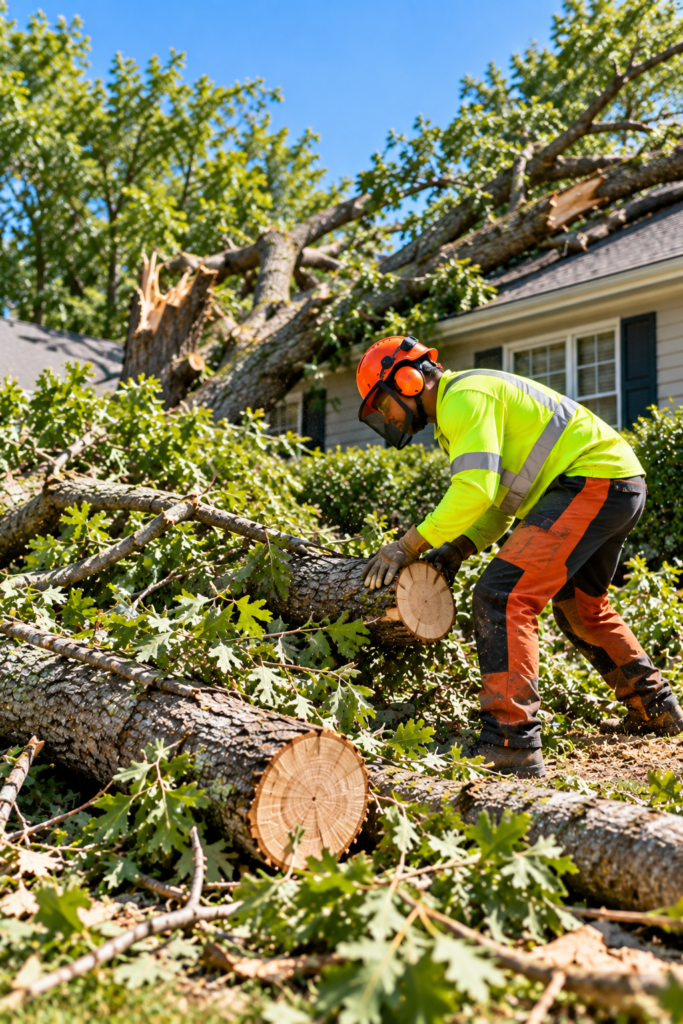
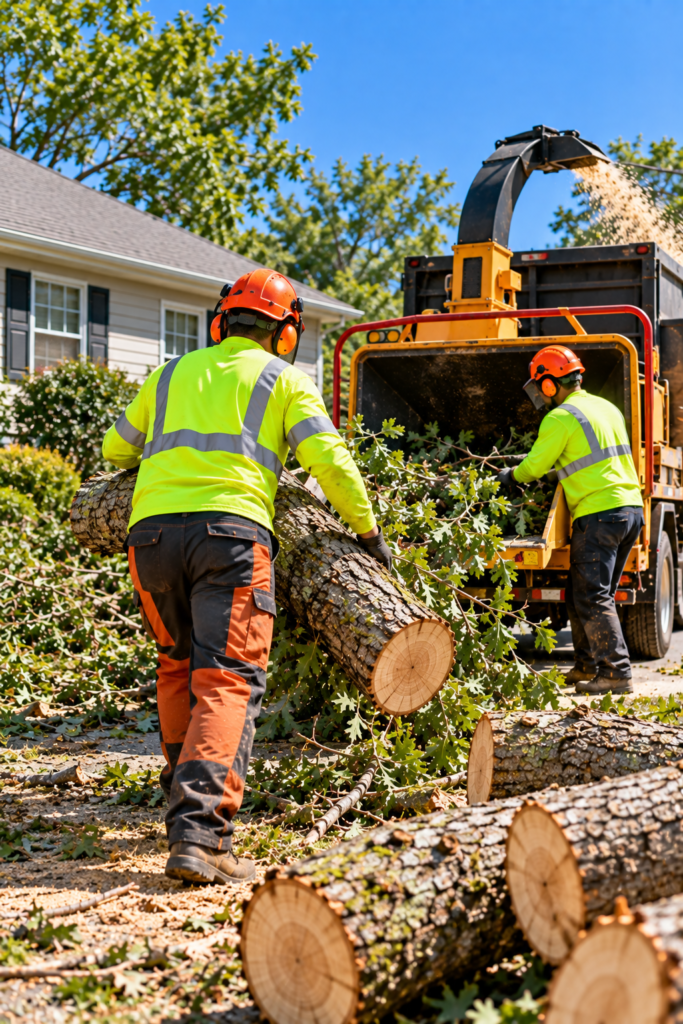
Brush clearing deals with small woody growth. Established trees are a different matter. Cutting down a larger tree involves more planning, different equipment and more risk, particularly when it stands near buildings, fences or power lines.
If an overgrown area includes trees that also need to come down, tree removal is handled as its own service. Not every tree in an overgrown area needs removing, either. Many are worth keeping once the brush around them is cleared.
When Stump or Root Removal May Also Be Needed
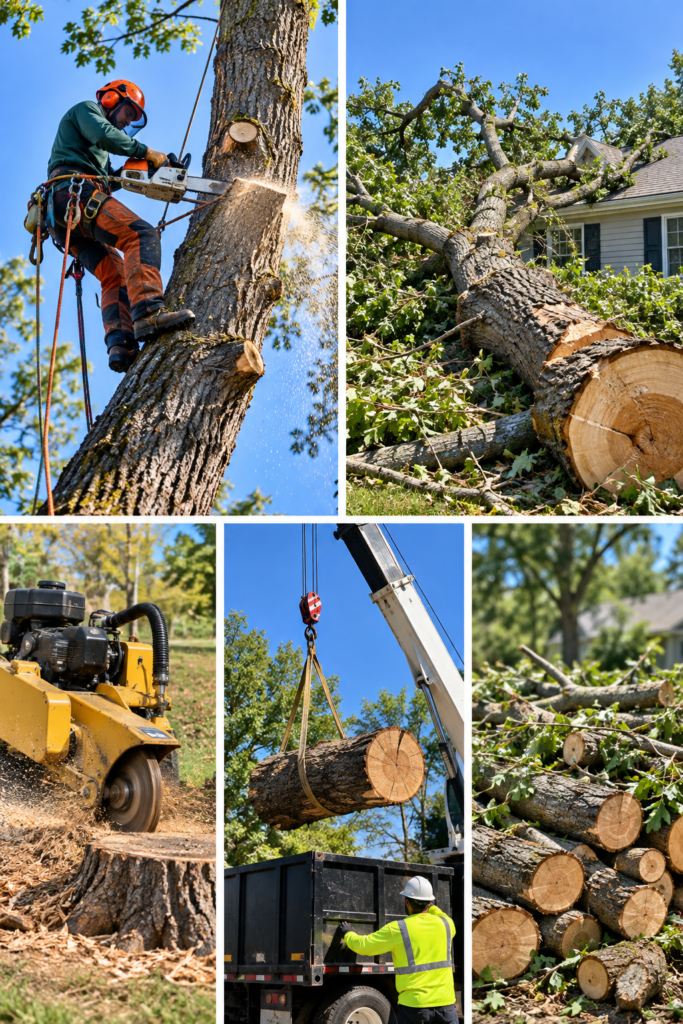
Cutting brush and saplings at ground level can leave stumps and roots behind. Small ones may not matter for the planned use of the area, but larger stumps can get in the way of mowing, building or landscaping.
Where that’s the case, stump grinding or stump removal may be the next step. If roots are interfering with a planned project, tree root removal may also be worth discussing.
After an Area Is Cleared
Expect some regrowth
Brush clearing does not permanently stop vegetation from coming back. Many woody plants can resprout from roots or stumps, and seeds may already be in the soil. How much regrowth appears depends on the vegetation and on how the area is managed afterward.
Ongoing property maintenance
Regular mowing or periodic follow-up clearing can help keep a cleared area from filling in again. For the trees you decide to keep, routine tree maintenance can help them stay in good condition as part of wider property maintenance.
Safety and power lines
If brush or trees are growing near electrical equipment or power lines, stay clear and contact the utility or another qualified authority. If a line is down, stay away from it and anything it touches, and call 911 and Liberty Utilities at 1-800-206-2300. Clearing dense growth can also hide uneven ground, debris and other hazards, so it is not a job to rush.
Related Tree Services
Brush clearing often goes hand in hand with other work on a property, from removing a tree that has outgrown its space to dealing with the stumps left behind. You can explore our full range of tree services in Joplin to see what else may help.
Brush Clearing FAQs
Brush clearing removes dense brush, undergrowth, unwanted small woody growth and accumulated branches from overgrown areas. The exact scope depends on the site and how you plan to use it.
Typically shrubby brush, vines, undergrowth, small woody growth and small saplings. Vegetation you want to keep, such as healthy trees or planted beds, can be left in place.
No. Brush clearing focuses on undergrowth and small woody vegetation in specific areas. Full-scale land clearing is a much larger job involving trees, stumps and site preparation across a property.
Yes, where removing them fits the plan for the area. Saplings you’d like to keep can be left to grow.
No. Larger trees are handled as a separate tree removal service, since they involve more planning and risk.
It can. Many woody plants resprout from roots or stumps, and seeds may remain in the soil. Results depend on the vegetation and how the area is managed afterward.
Small stumps may not affect how the area is used. Larger stumps can be dealt with separately through stump grinding or stump removal.
Overgrown Area on Your Property?
Call to describe the area and how you’d like to use it, and talk through whether brush clearing is the right fit.
Get Quick Estimate
Copyright 2024 | All RIghts Reserved