- (417) 674-4531
- info@treeservicejoplinmo.com
- Mon - Fri: 9:00 - 18:30
REDUCING CANOPY HEIGHT AND SPREAD, SELECTIVELY
Crown Reduction in Joplin, MO
When a mature tree has grown taller or wider than its space allows, crown reduction can make the canopy smaller without destroying the tree’s natural structure. It is a selective pruning service that reduces a tree’s height, its canopy spread, or both.
If a tree on your Joplin property is reaching toward the house or spreading too far, call to talk through whether reducing its crown makes sense.

What Is Crown Reduction?
Crown reduction is a form of selective pruning that makes a tree’s canopy smaller. Rather than cutting branches off at an arbitrary height, the longest branches are shortened back to suitable side branches, which then become the new outer edge of the crown.
The aim is a smaller tree canopy that still looks and grows like the same tree. The University of Minnesota Extension’s guide to pruning trees and shrubs describes crown reduction as a way to reduce a tree’s height and explains how, done properly, it differs from topping.
When Can Crown Reduction Be Useful?
Crown reduction may be considered when a tree’s size is causing a specific, practical problem, such as:
- Branches growing toward a roof, wall, chimney or other structure
- A canopy spreading over a driveway, patio or neighboring property
- Long, overextended limbs carrying a lot of weight near their tips
- A tree that has simply outgrown the space around it
A large tree is not automatically a problem. Many mature trees never need crown reduction, and sometimes lighter pruning or clearance work is all that’s needed.

Managing Tree Height and Canopy Spread
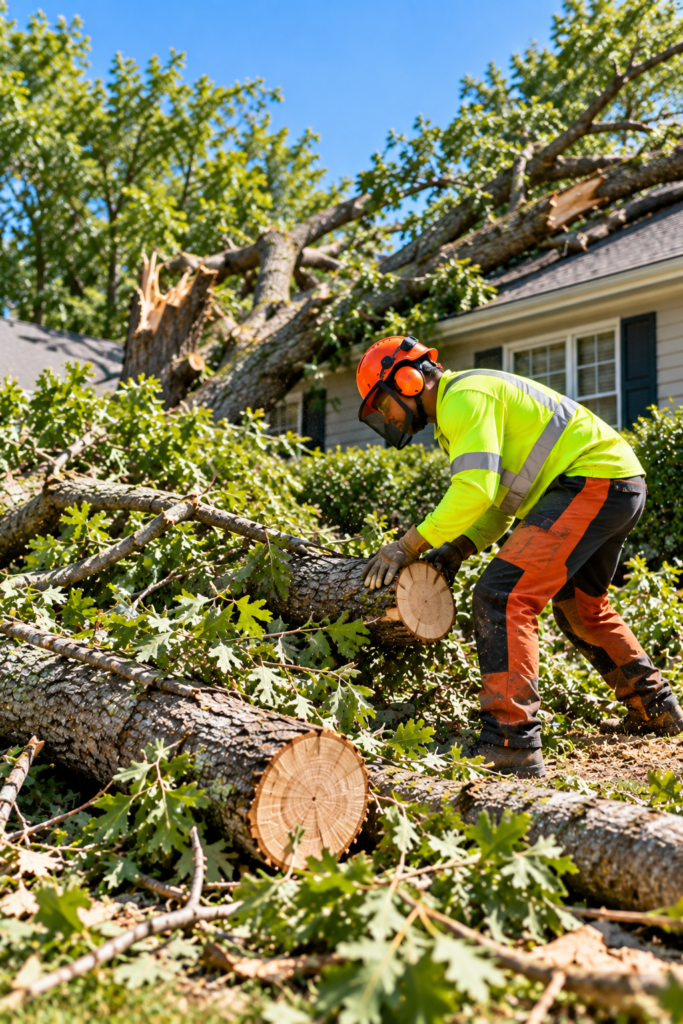
A reduction can address a tree’s height, its canopy spread, or both. Reducing height lowers the top of the crown, while reducing spread shortens the branches that reach outward. Which one makes sense depends on the tree and the problem being solved.
Reductions are kept selective. Removing only what is needed helps the tree keep enough leaves to produce energy and recover from the cuts.
It’s also important to set realistic expectations. Trees keep growing afterward, so crown reduction does not permanently hold a tree at a specific size. Some trees may need follow-up work over time.
Shortening Overextended Branches
Branches that grow long and heavy toward their ends carry weight far from the trunk. Branch reduction shortens these limbs back to a suitable side branch, reducing their length and end weight while leaving them attached and growing.
This can ease some of the load on a branch, but no pruning eliminates every risk of branch or tree failure. A limb that shows cracks, decay or other signs of weakness may need a different solution.

Reducing the Canopy of Mature Trees
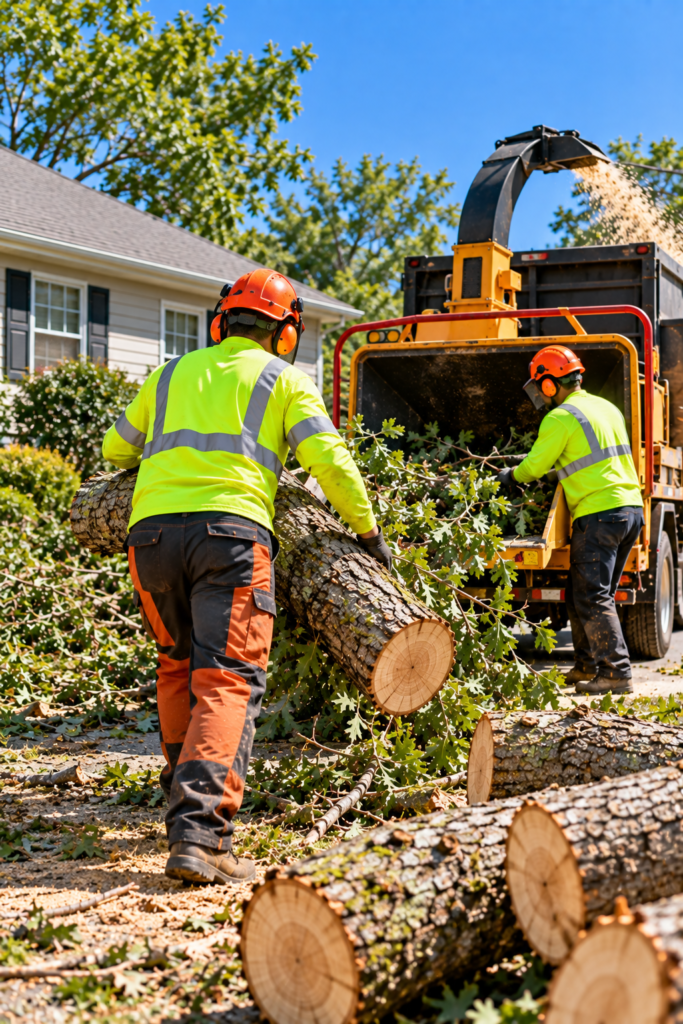
Mature trees are often the ones people want reduced, yet they are also among the most sensitive to heavy pruning. An older tree has less capacity to replace lost canopy and to close over large wounds, so removing too much at once can leave it stressed.
That’s why each tree should be assessed first. Its condition, branch structure, species and surroundings all affect whether a reduction is suitable and how much, if any, should be done. If you have concerns about a tree’s health or stability, a tree inspection is a sensible place to start.
Crown Reduction vs. Tree Topping
Crown reduction is sometimes confused with tree topping, but the two are very different.
Topping cuts a tree’s top or main branches back to stubs, often at a uniform height, without regard for where the branches naturally divide. It removes a large amount of canopy at once, can open the tree to decay, and tends to trigger dense, weakly attached regrowth. The tree’s natural form is lost, and the size problem often returns.
Proper crown reduction is selective. Branches are shortened back to suitable side branches, the remaining branch structure is taken into account, and the tree’s natural form is preserved. Topping is not a substitute for crown reduction.
Protecting Tree Health
Why too much canopy removal can harm a tree
A tree’s leaves produce the energy it needs to grow, defend itself and seal off wounds. Removing too much of the canopy cuts that energy supply and creates more wounds to deal with. Over-pruning can leave a tree weakened and prone to decay and weakly attached sprouts.
When a reduction may not be appropriate
Reducing the crown isn’t the right answer for every tree. It may not be suitable when a tree is already in decline, has significant decay or structural defects, or would need so much removed that little healthy canopy would remain. In those cases, a different pruning approach, support options or, sometimes, removal may be worth discussing.
Safety and power lines
Never attempt to prune branches that are near or touching power lines. Stay well clear and contact the utility. If a line is down, stay away from it and anything it touches, and call 911 and Liberty Utilities at 1-800-206-2300. Reducing large branches also involves climbing, rigging and overhead cutting, so it is not a DIY job.
Related Tree Services
Crown reduction is one specific kind of pruning. Depending on what your tree needs, a related service may be a better fit:
- Tree pruning covers the broader range of selective cuts made for tree health, structure and safety.
- Tree trimming focuses on managing branch growth and clearance around homes, roofs and walkways.
- Tree shaping focuses on form, balance and appearance rather than overall size.
- Crown thinning manages density inside the canopy rather than reducing its overall size.
- Tree maintenance covers ongoing care for your trees over time.
You can also explore our full range of tree services in Joplin.
Crown Reduction FAQs
Crown reduction is selective pruning that reduces a tree’s height or canopy spread by shortening branches back to suitable side branches, so the tree keeps a natural structure.
No. Topping cuts branches back to stubs without regard for the tree’s structure and can seriously damage a tree. Crown reduction is selective and aims to preserve the tree’s natural form.
Often, yes. It can lower a tree’s overall height, but whether it’s suitable, and by how much, depends on the tree’s species, condition and structure.
Yes. Shortening overextended branches can reduce canopy spread and improve clearance from structures while leaving the tree with a natural shape.
Any pruning creates wounds, and removing too much canopy can stress a tree. A selective reduction, done only where appropriate, aims to limit that stress, which is why the tree should be assessed first.
No. Trees in decline, trees with significant decay or defects, and trees that would need heavy removal may be better served by a different approach.
There’s no universal schedule. Trees keep growing, so some may need follow-up work in later years while others may not need it again. It depends on the tree and its surroundings.
Is Your Tree Outgrowing Its Space?
Call to describe the tree and what you’d like to change, and talk through whether reducing its crown makes sense.
Get Quick Estimate
Copyright 2024 | All RIghts Reserved