- (417) 674-4531
- info@treeservicejoplinmo.com
- Mon - Fri: 9:00 - 18:30
A CLOSER LOOK AT YOUR TREE’S CONDITION
Tree Inspection in Joplin, MO
Sometimes a tree just doesn’t look right: a branch has died, the canopy seems thinner, or it leans more than you remember. A tree inspection is a way to take a closer look at the tree’s visible condition and structure, understand what may be going on, and decide on sensible next steps.
If you have a tree on your Joplin property you’re unsure about, call to describe what you’ve noticed and arrange a tree inspection.

When Should You Consider a Tree Inspection?
- A tree’s appearance has changed, such as thinning leaves, early fall color or dieback
- Dead or broken branches have appeared in the canopy
- A tree has started leaning, or leans more than it used to
- You’ve noticed cracks, cavities or mushrooms on the trunk or at the base
- A storm has passed through and a tree took damage
- Construction, trenching or grading is planned near a tree
- A tree stands over a home, driveway, walkway or play area
- You’re deciding whether a tree should be pruned or removed
An inspection doesn’t have to be prompted by a problem. It can simply confirm that a tree is in reasonable shape.
What Can Be Reviewed During a Tree Inspection?
A tree inspection is an evaluation of visible conditions. It typically looks at the tree’s overall condition, the trunk, major branches and branch unions, the canopy, the root area and the tree’s surroundings, including what could be affected if part of the tree failed.
The USDA Forest Service’s guide to recognizing tree defects recommends inspecting trees systematically, examining the roots, root flare, trunk, branches and branch unions on all sides, and inspecting routinely after severe storms. It also notes that green foliage alone doesn’t ensure a tree is sound.
A visual inspection has limits. Internal decay, some diseases, pests and root problems may not be visible, so an inspection helps identify concerns rather than guarantee that none exist.

Trunk, Branch and Canopy Conditions
Some observations may deserve further attention:
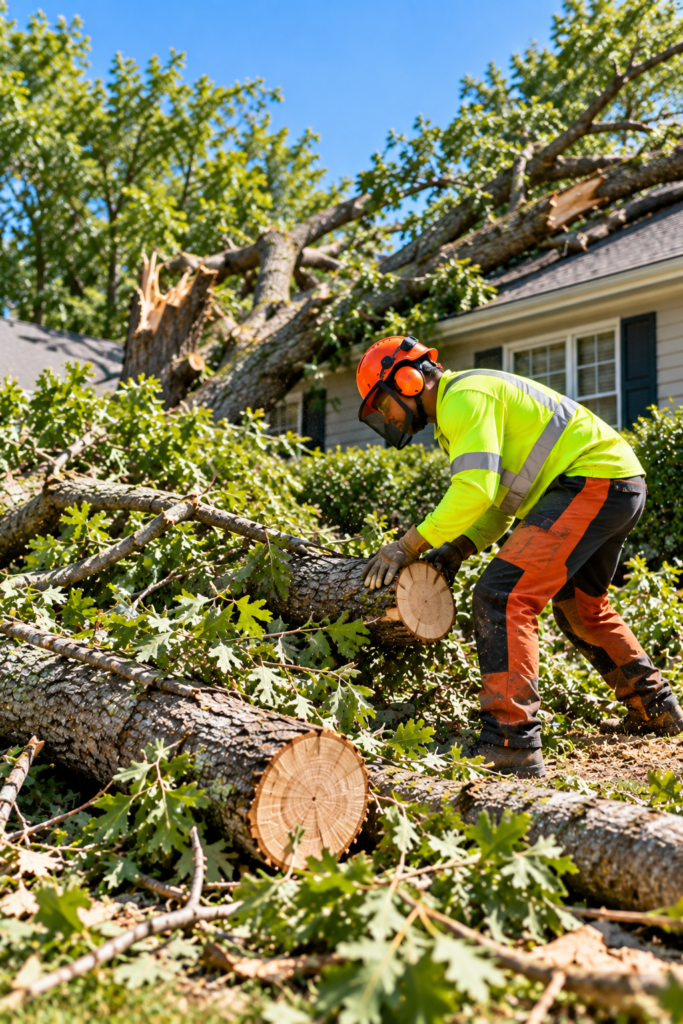
- Trunk: cracks, cavities, loose bark, or mushrooms and conks growing on the bark
- Branches: dead limbs, broken or hanging branches, or tight forks where two stems grow closely together
- Canopy: thinning foliage, smaller or off-color leaves, or dieback at the branch tips
One symptom doesn’t always establish a cause. Thin foliage might reflect drought, root damage, pests or disease, and a cavity may or may not affect the tree’s strength. An inspection looks at how observations fit together rather than drawing conclusions from any single one.
Root Area and Tree Stability Concerns
Most roots are out of sight, so signs above ground are often the first clues. Soil heaving or cracking on one side of the tree, exposed or damaged roots, fungal growth at the base, or a lean that has recently appeared or increased may suggest root-area problems worth a closer look.
Changes around the tree matter too. Trenching, paving, grade changes or heavy equipment near a tree can damage roots, and the effects may not show until later. Not every leaning tree is unstable, but a change in lean is a reason to have the tree assessed.

Tree Inspections After Storm Damage
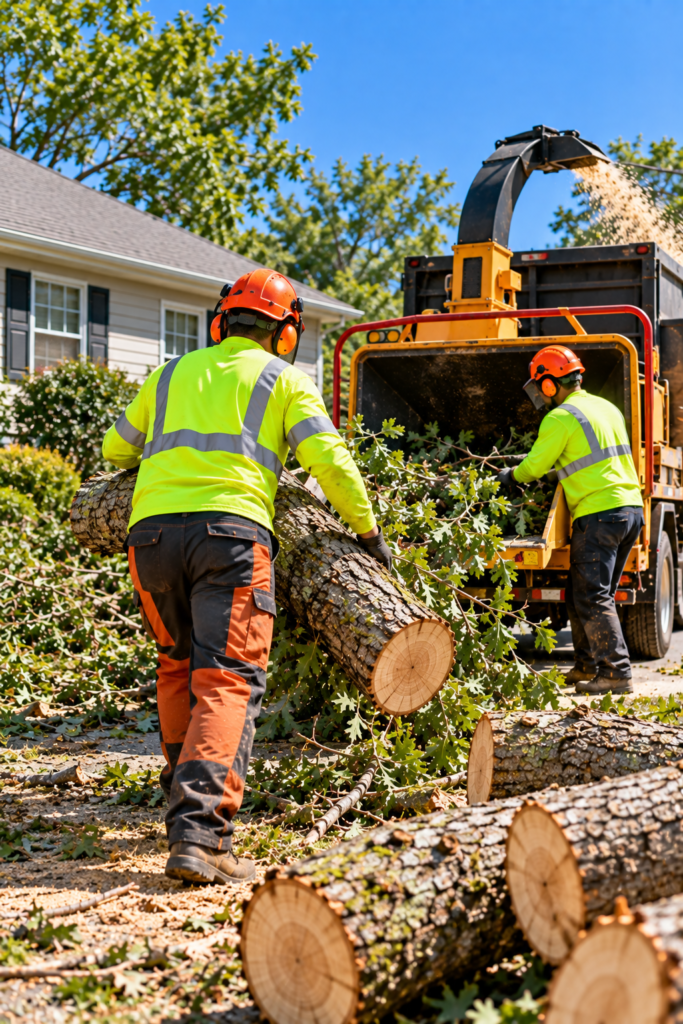
After strong wind or ice, it’s worth looking over your trees once conditions are safe. From a distance, check for broken or hanging branches, split trunks, a new lean or lifted soil at the base.
Don’t walk under damaged trees or hanging limbs while you look. If a storm has left clear damage, our storm damage tree service covers assessment and the work that may follow.
Does an Inspection Mean the Tree Needs Removal?
No. Many inspections end with good news or simple recommendations. Depending on what’s found, possible next steps might include:
- No action for now, with the tree looked at again later
- Monitoring a specific concern, such as a lean or a small area of decay
- Pruning to remove dead, damaged or poorly attached branches
- Removing the tree when concerns are serious or the tree is dead, through planned tree removal, hazardous tree removal or dead tree removal
The aim is to match the response to what the tree actually needs.
What You Can Safely Observe Yourself
Look from the ground
Walk around the tree and look at it from all sides. Check the base, trunk, branches and canopy, and compare how it looks with past seasons. Binoculars can help with branches high in the tree.
What not to do
Don’t climb the tree, use a ladder to reach branches, cut branches to check them, strike or drill the trunk, dig around major roots, or try to test the tree’s stability. Stay away from trees that look unstable or have been damaged by a storm.
Power lines
If a tree or branch is touching or near a power line, stay clear and don’t touch the tree, branch or line. Liberty Utilities, which provides electric service in the Joplin area, directs customers to call 911 and Liberty at 1-800-206-2300 about downed lines.
Related Tree Services
An inspection often leads to other work, such as pruning, cleanup after a storm or removal of a tree that can’t be kept. See the full range of our tree services in Joplin.
Tree Inspection FAQs
Consider an inspection when a tree’s appearance changes, dead or broken branches appear, it starts leaning, you notice cracks or fungal growth, after storm damage, before nearby construction, when buying a home, or when a tree stands over a home or busy area.
An inspection looks at visible conditions: the trunk, branches and branch unions, the canopy, the root area and the tree’s surroundings. It can’t reveal every internal defect, disease or root problem.
It’s a good idea if you see broken or hanging branches, cracks, a new lean or lifted soil. Look from a safe distance and don’t walk under damaged limbs.
Not every leaning tree is a problem. A new or increasing lean, especially with soil movement or exposed roots at the base, is worth having inspected.
No. Many inspections result in no action, monitoring or pruning. Removal is only one possible outcome when concerns are serious.
Often, yes. If concerns are limited to specific branches, an inspection can help identify whether removing dead, damaged or poorly attached branches may be an appropriate next step.
You’ll have a clearer picture of the tree’s visible condition and possible next steps, such as monitoring, pruning or removal. You can then decide what, if anything, to do.
Want a Closer Look at a Tree?
Call to describe what you’ve noticed and arrange a tree inspection.
Get Quick Estimate
Copyright 2024 | All RIghts Reserved