- (417) 674-4531
- info@treeservicejoplinmo.com
- Mon - Fri: 9:00 - 18:30
REMOVING DEAD AND DYING TREES SAFELY
Dead Tree Removal in Joplin, MO
A tree that didn’t leaf out this spring, or one that has been losing limbs for a few seasons, raises an obvious question: is it dead, and does it need to come down? Dead tree removal is for trees that are dead or dying, where the wood is drying out and the tree can no longer be relied on to hold itself together.
If you have a tree on your Joplin property that you think may be dead, keep people out from under it and call to describe what you’re seeing.

How Can You Tell If a Tree May Be Dead?
Signs that may point to a dead tree, or a dead section of one, include:
- No leaves or buds when similar trees nearby have fully leafed out
- Bark loosening, cracking away or falling off in large pieces
- Small twigs that look dry and brittle throughout the canopy
- Mushrooms, conks or other fungal growth on the trunk or at the base
- Large bare limbs with no new growth year after year
Timing matters. In winter, a healthy deciduous tree can look lifeless, and some species leaf out later than others. No single sign proves a tree is dead, so it’s worth having the whole tree checked. An arborist can look at buds, twigs and inner bark to tell living wood from dead.
Signs of a Dying or Declining Tree
Many trees don’t die suddenly. They decline over time as stress weakens them. University of Missouri Extension’s guide to tree decline lists early symptoms such as premature fall color, late leaf-out in spring, reduced twig growth, leaf scorch and early leaf drop. Later signs include dieback of larger limbs, sprouts from the trunk, and foliage that looks smaller, lighter and thinner across the canopy.
Those symptoms can appear quickly or develop over several years. A declining tree isn’t automatically a lost cause, but the guide notes that removing weak and dying trees can help prevent secondary insect and disease problems from building up.

Why Dead Trees Become More of a Concern Over Time
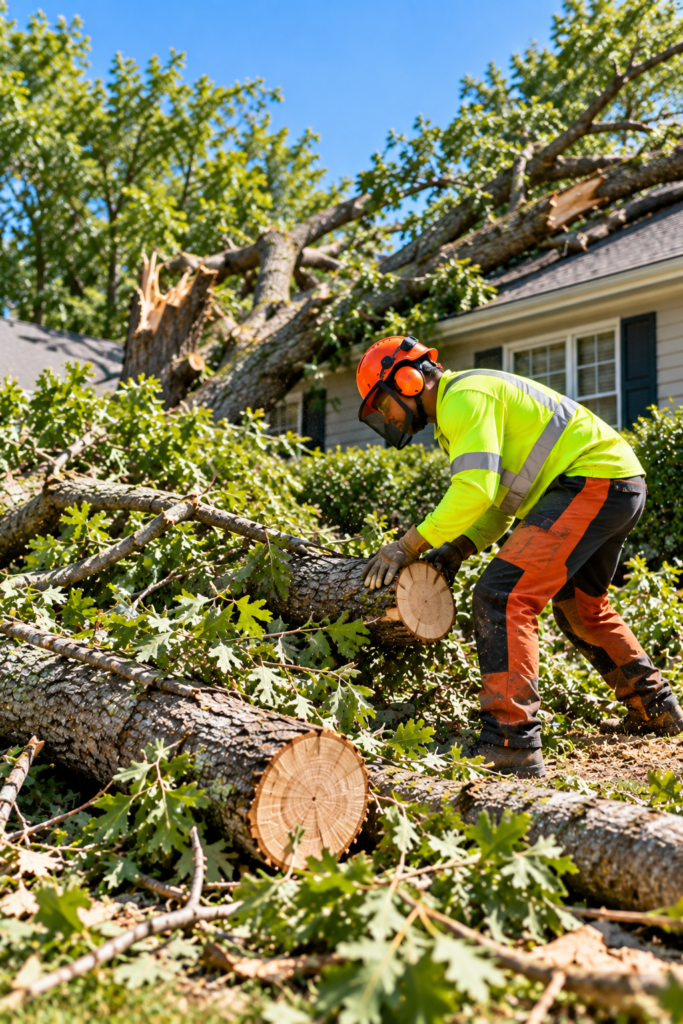
A living tree can flex in the wind. Dead wood gradually dries out and becomes brittle, and decay keeps weakening the trunk and limbs as time passes. Dead branches can break and fall without warning, even on a calm day.
Because dead trees keep deteriorating, they often become harder and riskier to remove the longer they stand. Leaving a dead tree for years near a home or driveway rarely makes the eventual work simpler.
Dead Trees Near Homes and Property
How urgently a dead tree needs attention depends largely on what’s within reach of it. A dead tree at the back of a large lot with nothing nearby is a lower priority than one standing over a roof, driveway, fence, walkway or play area.
Until a dead tree near a structure has been assessed, avoid parking or gathering underneath it and keep children and pets away. Live trees with cracks, decay or a shifting lean raise their own concerns, covered on our hazardous tree removal page.

What Affects Dead Tree Removal
Dead trees need a different approach from healthy ones, and an accurate estimate usually depends on seeing the tree. Factors include:
- How long the tree has been dead and how deteriorated the wood is
- The size and height of the tree
- What’s underneath or nearby, such as a house, fence or vehicles
- Power lines near the tree
- Access for equipment around buildings, slopes or fences
- Whether cleanup, hauling and stump work are included
Dead Tree Removal vs. Dead Branch Removal
Part of a tree can die while the rest stays alive. When only a few limbs are dead and the trunk and remaining canopy are healthy, removing the dead branches may be all that’s needed, and the tree can stay.
When most or all of the tree is dead, or dieback keeps spreading through the canopy, removing the whole tree is usually the practical choice. That can typically be scheduled as planned tree removal. If a dead tree is actively cracking, shedding large limbs or leaning toward a structure, emergency tree removal is the better route.
After a Dead Tree Is Removed
Cleanup
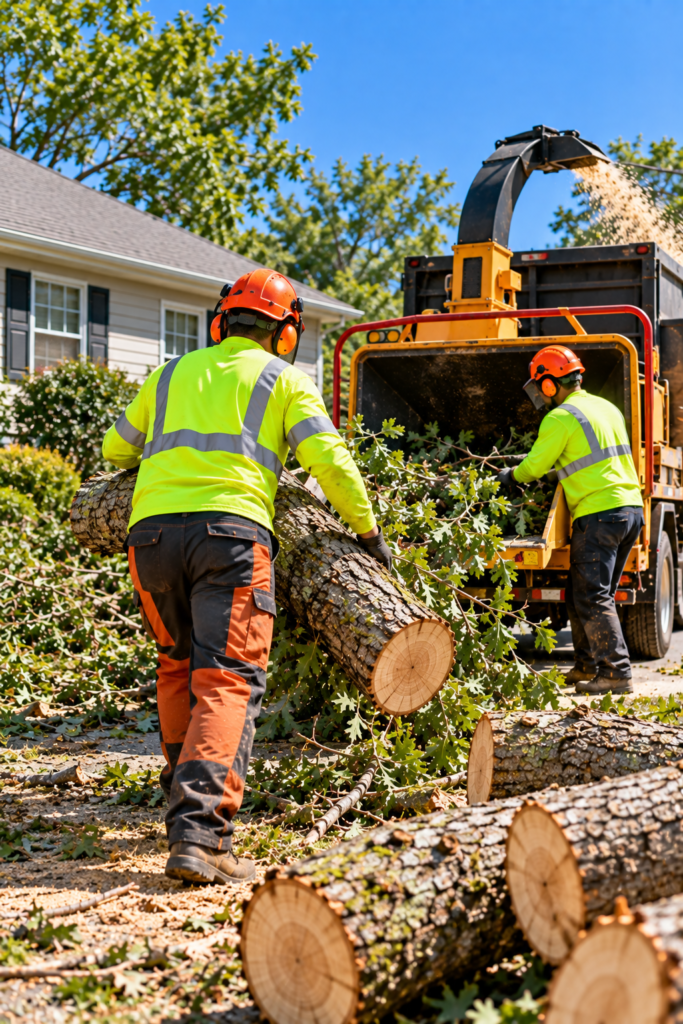
Dead trees often produce a lot of dry, broken wood and debris. Whether it’s chipped, hauled away or left on site should be agreed before work begins.
Stump options
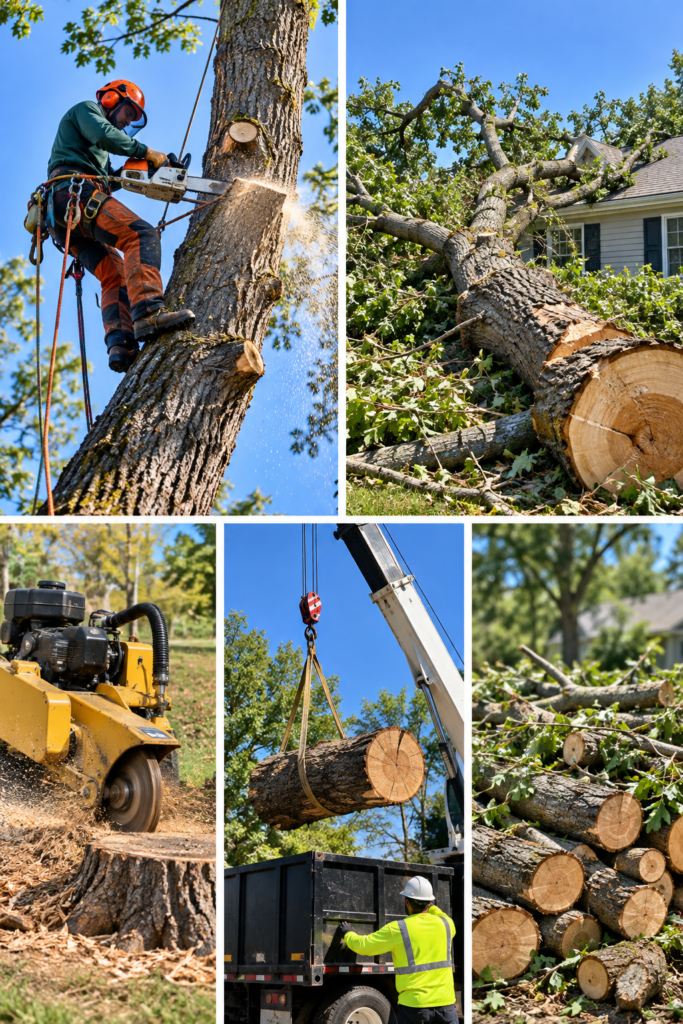
Removing a dead tree usually leaves a stump. Stump grinding takes it below ground level so the area can be planted or turned back into lawn, while removing the stump and its roots may suit areas you plan to build on or regrade.
Staying safe until removal
Keep clear of dead limbs and the area beneath a dead tree, and don’t climb, shake, strike or cut it to test how solid it is. If a dead tree or branch is touching a power line, stay away and don’t touch the tree or the line. Liberty Utilities, which provides electric service in the Joplin area, directs customers to call 911 and Liberty at 1-800-206-2300 about downed lines.
Related Tree Services
A dead tree is sometimes a sign that neighboring trees are under stress too, so it can be worth having nearby trees looked at while you’re dealing with it. See the full range of our tree services in Joplin.
Dead Tree Removal FAQs
Signs include no leaves when nearby trees have leafed out, bark falling away, brittle twigs throughout the canopy, and fungal growth on the trunk. No single sign is proof, and dormant trees can look dead in winter, so an assessment helps confirm it.
Usually, especially if it’s near a home, driveway or area people use, because dead wood becomes brittle and deteriorates over time. A dead tree far from anything may be a lower priority, but it should still be assessed.
There’s no set timeline. It depends on the tree’s size, how it died, decay, weather and other conditions. Dead limbs can fall at any time, so it’s better not to count on a dead tree staying put.
No. If only some limbs have died and the rest of the tree is healthy, removing the dead branches may be enough.
Yes. Individual limbs or one side of a tree can die while the rest keeps growing. Whether the tree can be kept depends on how much is dead and whether the trunk and roots are sound.
It’s usually left unless stump work is agreed. Stump grinding takes it below ground level, and full stump removal takes out the stump and main roots.
When it’s actively cracking, dropping large limbs, leaning toward a structure, blocking access, or touching power lines. Keep clear and call for help promptly; if lines are involved, call 911 and the utility first.
Have a Dead or Dying Tree on Your Property?
Call to describe the tree and what’s around it, and request a dead tree removal estimate.
Get Quick Estimate
Copyright 2024 | All RIghts Reserved