- (417) 674-4531
- info@treeservicejoplinmo.com
- Mon - Fri: 9:00 - 18:30
PLANNED REMOVAL OF LARGE AND MATURE TREES
Large Tree Removal in Joplin, MO
Large, mature trees are often the most valuable trees on a property, and the most complicated to take down when removal becomes necessary. Large tree removal focuses on the extra planning these trees need: heavy trunks and limbs, wide canopies, nearby structures and limited working space.
If a large tree on your Joplin property may need to come down, call to describe the tree, what’s around it and why you’re considering removal.

When Might a Large Tree Need Removal?
Size alone isn’t a reason to remove a tree. Large trees provide shade and value, and many stay healthy and stable for decades. Removal is usually considered when something else is going on, such as:
- The tree is dead, dying or in serious decline
- An assessment finds significant structural defects in the trunk, major limbs or roots
- Roots or limbs are damaging a house, foundation, driveway or other structure
- The tree stands where a planned addition, driveway or other construction needs to go
- The tree has outgrown its space in a way pruning can’t reasonably fix
An assessment of the whole tree helps separate a large tree that simply looks intimidating from one that has a real problem.
Why Large Trees Need Careful Planning
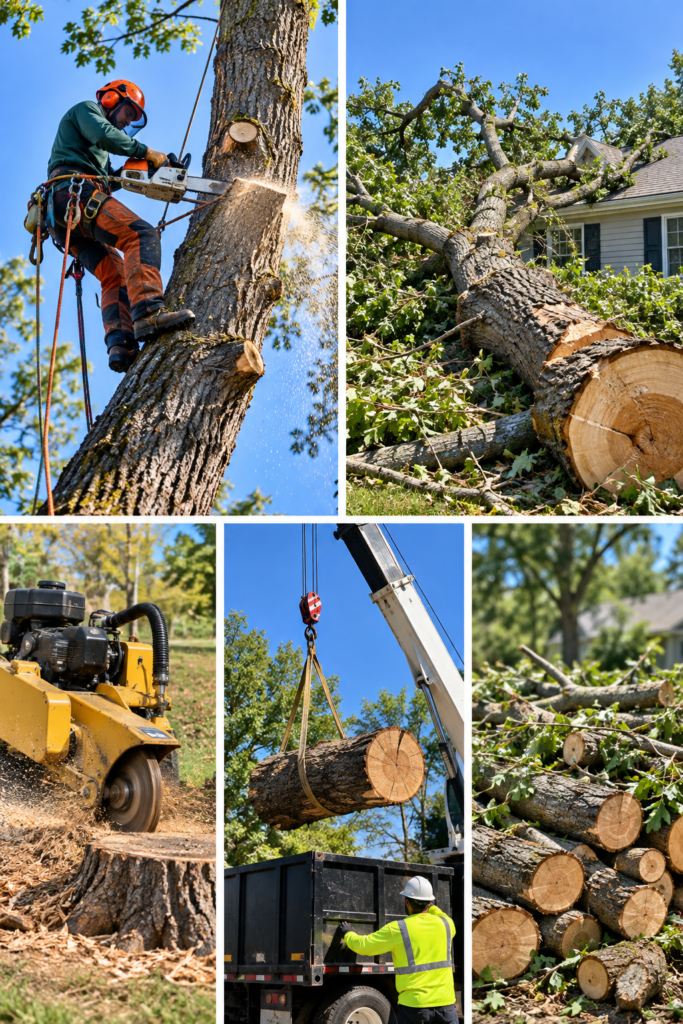
A large tree carries a great deal of weight in its trunk and limbs, and its canopy can spread well beyond the trunk. Where there isn’t room to let it come down in one piece, it’s usually taken down gradually in sections, with limbs and trunk pieces brought down in a controlled way into areas where they won’t cause damage.
Planning covers where each part of the tree will go, what needs protecting, how debris will be moved out, and how the crew and equipment will reach the tree. The larger the tree and the tighter the space, the more that planning matters.

Large Trees Near Homes and Structures
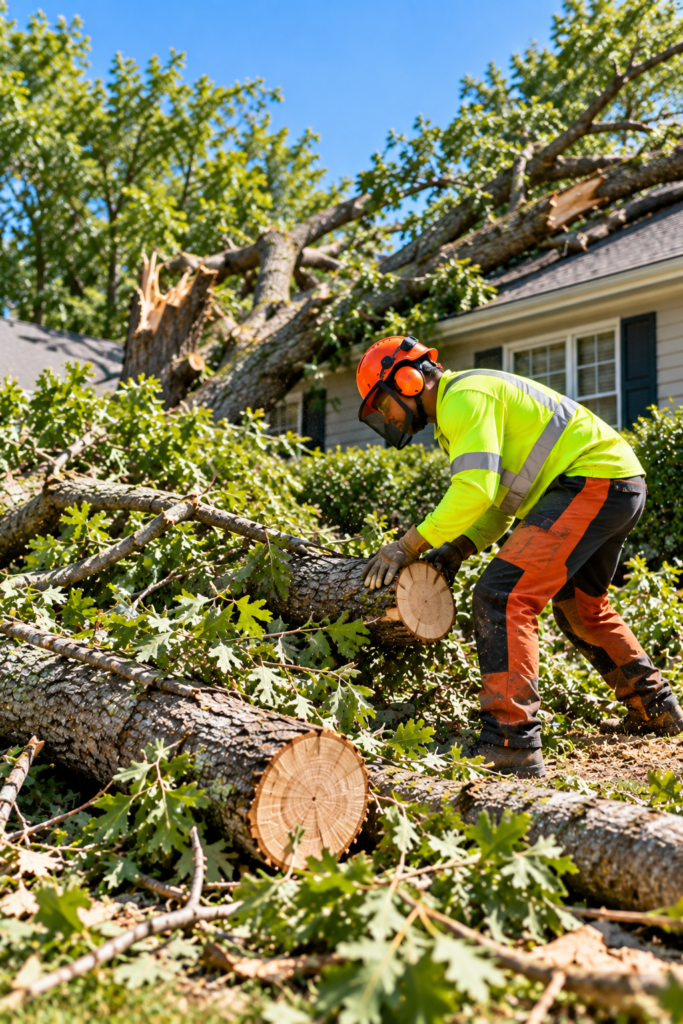
When a big tree stands close to a house, garage, fence or neighboring property, limbs and trunk sections typically need to come down in smaller pieces so nothing falls onto the structures around it. Roofs, gutters, decks, patios and landscaping all affect how the work is planned.
If any part of the tree is touching or near power lines, keep clear and don’t touch the tree or the line. Liberty Utilities, which provides electric service in the Joplin area, directs customers to call 911 and Liberty at 1-800-206-2300 about downed lines, and work near lines may need coordination with the utility.
Access and Working-Space Considerations
Getting equipment to the tree can be as important as the tree itself. Common access questions include:
- Is there a gate, and how wide is it?
- Is the tree in a backyard with no vehicle access?
- Are there slopes, retaining walls or soft ground in the way?
- Will equipment need to cross a lawn, driveway or neighboring property?
- Are there garden beds, irrigation lines or other features to protect?
Limited access doesn’t usually rule out removal, but it can change how the work is done and how long it takes.

Factors That Affect Large Tree Removal
Large tree removals vary widely, so an accurate estimate depends on seeing the tree and the site. Factors include:
- Tree height, trunk diameter and canopy spread
- The tree’s condition, including decay or dead wood
- What’s underneath or nearby: buildings, fences, vehicles and landscaping
- Power lines near the canopy
- Equipment access and working space
- The volume of wood and debris to be handled
- Whether stump grinding or stump removal is included
Does Every Large Tree Need to Be Removed?
No. A large tree isn’t automatically dangerous, and removing a healthy mature tree is a decision worth weighing carefully. Sometimes a specific concern, such as a heavy limb over the roof, can be handled with pruning rather than taking the whole tree down.
If the tree shows cracks, decay, a shifting lean or other structural warning signs, our hazardous tree removal page explains how those concerns are assessed. For smaller or simpler trees, see routine tree removal. If a tree is actively cracking, shifting or threatening a structure right now, emergency tree removal is the right starting point.
After a Large Tree Comes Down
Debris and cleanup
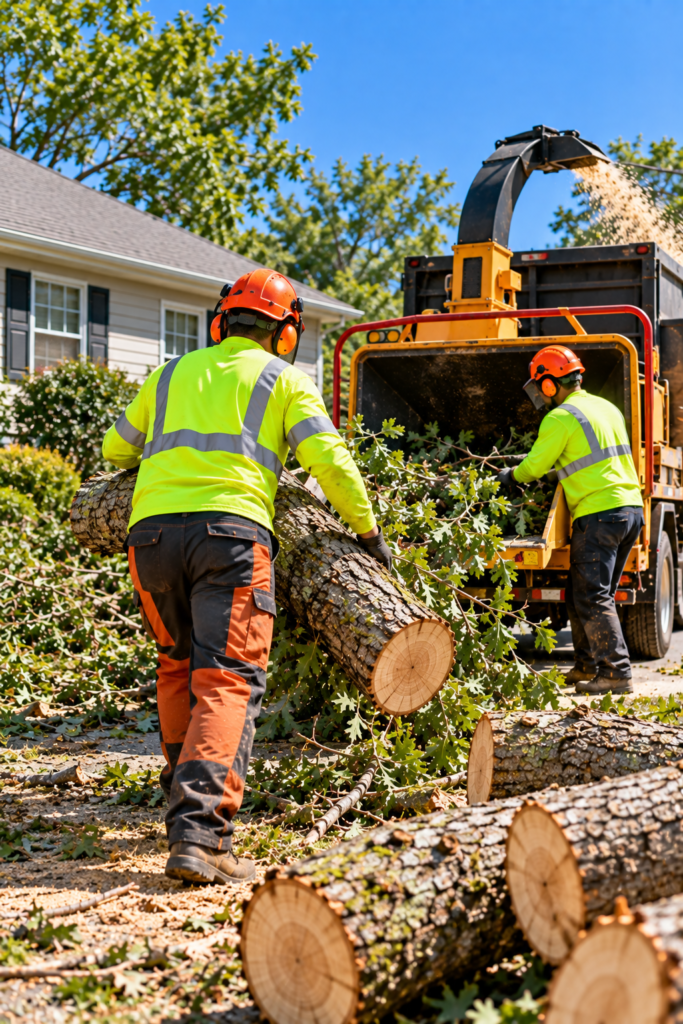
A tree this size produces a lot of material: heavy trunk sections, large branches and piles of smaller brush. Whether it’s chipped, cut into manageable pieces, hauled away or partly left on site should be settled before work begins.
Stump options
Large trees leave large stumps, often with wide surface roots. Stump grinding takes the stump below ground level so the area can be reused, while removing the stump and its roots may make more sense if you plan to build or regrade where the tree stood.
Choosing who does the work
Large removals near homes carry real consequences if something goes wrong. The Missouri Department of Conservation’s advice on how to hire an arborist suggests hiring people with the knowledge, experience and equipment to protect your property, asking to see current liability and workers’ compensation certificates where appropriate, and using a signed contract that follows ANSI A300 standards.
Related Tree Services
Removing a mature tree often changes the rest of the landscape. Nearby trees may be worth checking, and the stump area may need restoring. See the full range of our tree services in Joplin.
Large Tree Removal FAQs
Usually when it’s dead or declining, has significant structural defects, is damaging a structure, or stands where planned construction needs to go. Size alone isn’t a reason, so an assessment should come first.
No. Many large, mature trees are healthy and stable. Risk depends on the tree’s condition and what’s within reach of it, not just its size.
Typically in sections, with limbs and trunk pieces brought down in a controlled way so they don’t fall onto the house or other structures. The exact approach depends on the tree and the site.
Yes. Narrow gates, backyards, slopes and soft ground affect how equipment reaches the tree and how debris is moved out, which can change how the work is done and how long it takes.
Height, trunk size, canopy spread, the tree’s condition, nearby structures and power lines, access, and how much debris needs to be handled.
It’s usually left unless stump work is agreed. Stump grinding takes it below ground level, while full stump removal takes out the stump and main roots, which can be a bigger job for large trees.
The goal is the same, but large trees usually need more planning because of their weight, height, canopy spread and the space around them.
Have a Large Tree That Needs to Come Down?
Call to describe the tree and its surroundings, and request a large tree removal estimate.
Get Quick Estimate
Copyright 2024 | All RIghts Reserved