- (417) 674-4531
- info@treeservicejoplinmo.com
- Mon - Fri: 9:00 - 18:30
ASSESSING AND REMOVING TREES THAT POSE A REAL RISK
Hazardous Tree Removal in Joplin, MO
A tree with a deep crack, a large dead limb or a lean that seems to be getting worse can be hard to live next to, especially when it stands over a house, driveway or play area. Hazardous tree removal is about standing trees that may present a real safety risk: working out whether a tree is actually hazardous, and removing it when other options won’t make it safe.
If you’re concerned about a tree on your Joplin property, keep people out from under it and call to describe what you’re seeing.

What Makes a Tree Potentially Hazardous?
A tree becomes a hazard when two things come together: a defect that could cause all or part of the tree to fail, and something it could hit. The USDA Forest Service’s guide to recognizing hazardous tree defects puts it plainly: a tree with defects isn’t considered hazardous unless some part of it is within striking distance of a target, such as a home, vehicle, street or backyard where people gather.
That’s why the same defect can mean very different things. A dead limb over an empty field is a low priority. The same limb over a driveway or a swing set deserves prompt attention.
Warning Signs That Deserve Professional Attention
- Dead wood and hangers: dead branches, dead tops, or broken limbs lodged in the canopy
- Cracks: deep splits through the bark into the wood of the trunk or a major limb
- Weak branch unions: tight forks where bark is pinched between stems
- Decay: soft or crumbly wood, cavities, or mushrooms and conks on the trunk or root flare
- Cankers: sunken or missing bark over a large part of the trunk
- Root problems: roots cut, paved over or damaged, often with dieback in the crown
None of these signs alone proves a tree is dangerous. A full, green canopy doesn’t guarantee a tree is sound either, since trunks and branches can be seriously defective and still carry healthy leaves. An inspection of the whole tree is what matters.

Leaning Trees and Structural Changes
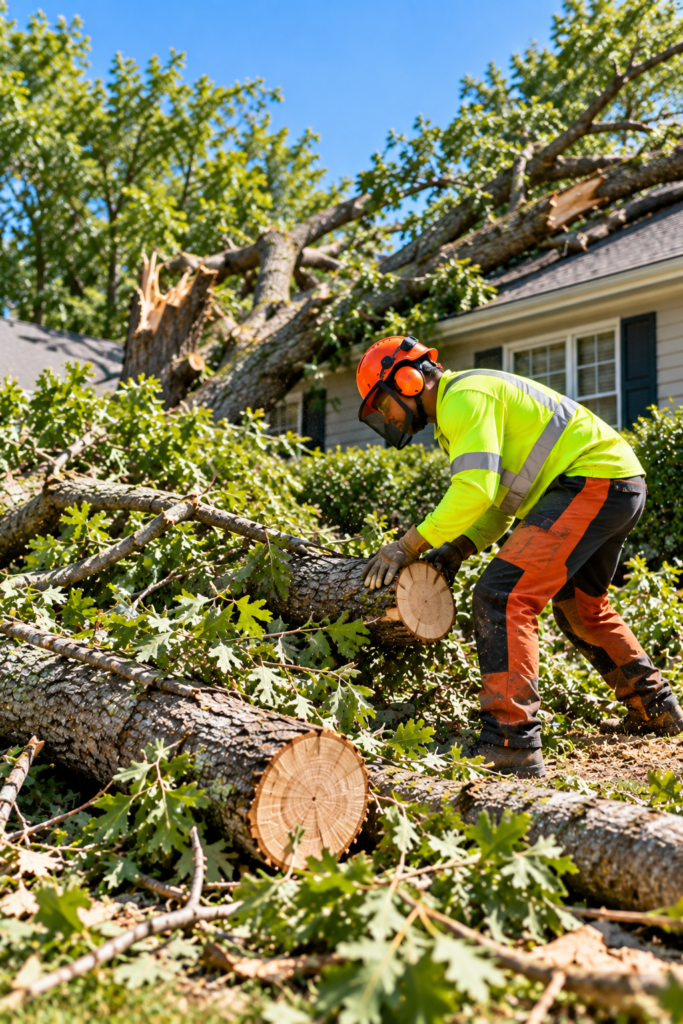
A lean by itself isn’t a reason to remove a tree. Many trees grow at an angle their whole lives and are well anchored. Not every leaning tree is dangerous, which is why a leaning tree of concern should be looked at by a professional.
What changes the picture is recent movement. A tree that has started leaning, or leans more than it used to, especially with soil mounding, cracking or exposed roots on one side, may have lost root support. That kind of change is a reason to keep clear and have the tree assessed soon.
Trunk, Branch and Root Problems
Deep cracks are among the most serious defects because they can mean the wood is already failing. Several cracks close together, or a crack connected to decay or a weak union, raise the concern further.
Decay is more nuanced. Many trees have some internal decay and still hold a sound outer shell of wood, so decay alone doesn’t make a tree hazardous. How much sound wood remains, and whether other defects are nearby, is what an assessment looks at.
Root damage often comes from construction: trenching, paving, driveway work or changing the soil grade near a tree. Because most roots are out of sight, symptoms in the crown may be the first warning.

What Affects Hazardous Tree Removal
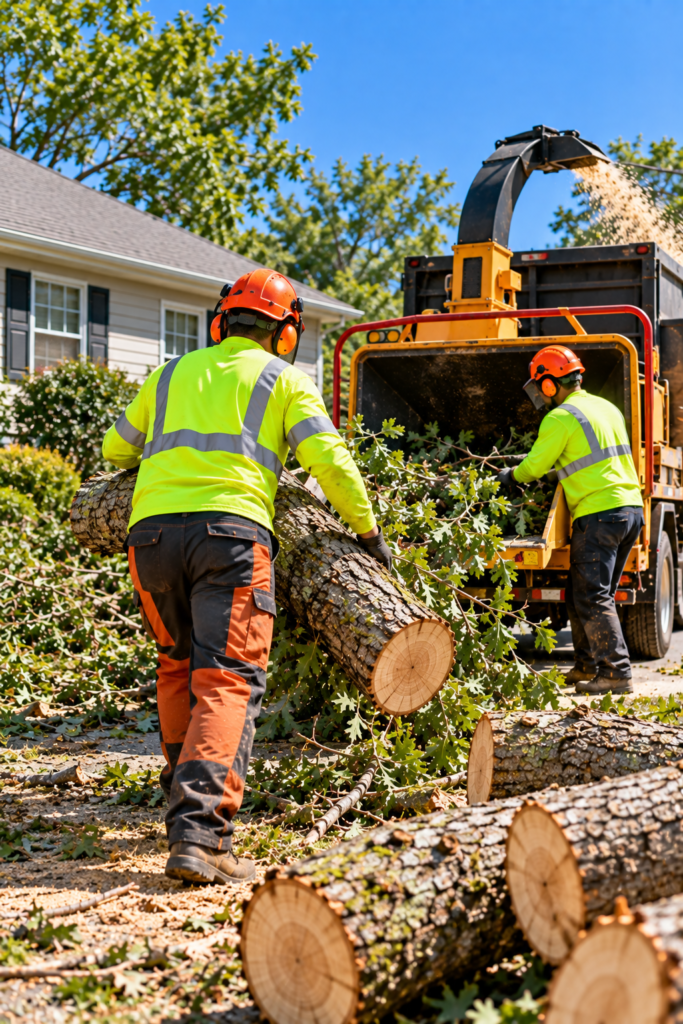
Hazardous trees can be more complex to remove than healthy ones, so an accurate estimate usually depends on seeing the tree. Factors include:
- What’s within reach of the tree, such as a house, garage, fence or driveway
- How stable the tree is and how much decay or cracking it has
- Power lines near the tree
- Access for equipment around buildings, slopes or fences
- The size of the tree
- Whether cleanup, hauling and stump work are included
Does Every Hazardous-Looking Tree Need Removal?
No. Removing a tree is usually the last option, not the first. Depending on the problem, a hazard can sometimes be reduced in other ways:
- Move what’s at risk. A picnic table, swing set or parking spot can often be relocated away from a defective tree.
- Prune the problem. When the defect is limited to one or a few branches and the rest of the tree is sound, targeted pruning can remove the risk while keeping the tree.
- Add support. For some trees with a weak branch union, supplemental support such as cabling or bracing may be considered, though it doesn’t make a tree failure-proof.
- Remove the tree. When defects affect the trunk or roots, several defects are close together, or nothing else will make the tree safe, removal becomes the right call.
When removal is needed but the tree isn’t about to fail, it can usually be handled as planned tree removal. When a tree is actively cracking, shifting or threatening a structure, emergency tree removal is the better route.
Hazardous Trees Near Homes and Property
Trees near structures and busy areas
Pay the most attention to trees that stand over or near places people and property are every day: roofs, driveways, walkways, patios, play areas and parked cars. Until a tree of concern has been assessed, avoid standing or parking beneath it, and keep children and pets away from visibly unstable limbs.
After storm damage
Severe weather can turn a minor defect into a serious one, and the Forest Service guide recommends inspecting trees routinely after severe storms. If storms have left trees with broken limbs or cracks, our storm damage tree service covers the assessment. If a tree has already come down, see fallen tree removal.
Power lines
If a tree or branch is touching or near a power line, stay clear and don’t touch the tree, branch or line. Liberty Utilities, which provides electric service in the Joplin area, directs customers to call 911 and Liberty at 1-800-206-2300 about downed lines. Tree work near the lines should wait until the utility has made the area safe.
Related Tree Services
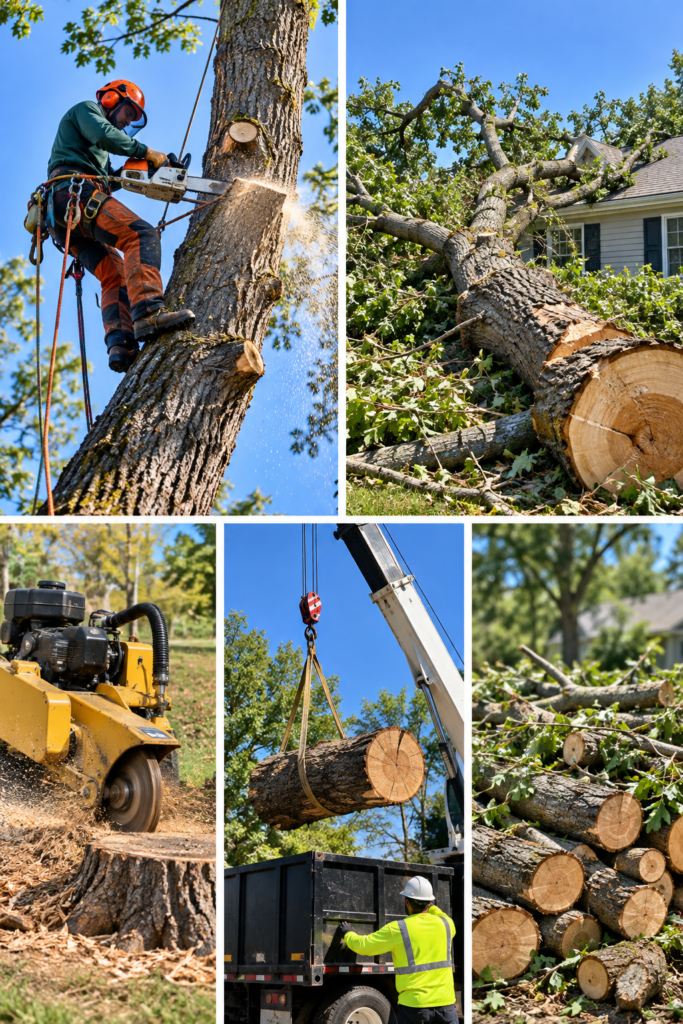
After a hazardous tree is removed, the stump is usually left behind unless it’s ground or removed as part of the job, and nearby trees may be worth checking too. See the full range of our tree services in Joplin.
Hazardous Tree Removal FAQs
Warning signs include dead limbs or broken branches lodged in the canopy, deep cracks, decay or fungal growth, a recent lean with soil movement, and root damage. A tree is a real hazard when a defect like this is combined with something it could hit, so an assessment of the whole tree is needed.
No. Many trees lean naturally and are stable. A new or increasing lean, especially with soil mounding or exposed roots at the base, is the kind that needs prompt assessment.
Keep people, pets and vehicles out from under it and away from where it could land. Don’t try to cut or brace it. If power lines are involved, call 911 and the utility, then call to have the tree assessed.
Sometimes. If the problem is limited to one or a few branches, pruning may remove the risk, and moving whatever is at risk out of the tree’s reach can also help. Removal is usually the last option.
Generally when defects affect the trunk or roots, several defects occur together, or pruning and other steps won’t make the tree safe for the people and property around it.
Stay out of areas within its reach where possible, keep people clear of the tree, and have it assessed as soon as you can. If it’s actively cracking or shifting, treat it as an emergency.
Not always. Many hazardous trees can be assessed and removed as planned work. Emergency tree removal is for trees that have failed or are actively threatening people, structures or access right now.
Worried About a Tree Near Your Home?
Call to describe the tree and what’s around it, and request a hazardous tree removal estimate.
Get Quick Estimate
Copyright 2024 | All RIghts Reserved