- (417) 674-4531
- info@treeservicejoplinmo.com
- Mon - Fri: 9:00 - 18:30
URGENT REMOVAL OF FAILED AND UNSTABLE TREES
Emergency Tree Removal in Joplin, MO
When a tree has split, uprooted, or come down against a house, fence or driveway, the question is often whether the whole tree can stay. Emergency tree removal focuses on those situations: trees that have failed or may fail soon, where waiting for routine work could put people or property at risk.
If a dangerous tree is threatening your Joplin property, keep everyone well away from it, call 911 and the utility first if power lines are involved, then call to describe the situation.

When Is Emergency Tree Removal Necessary?
Emergency removal is usually considered when a tree’s failure has already happened or appears likely, and the tree is close to something that matters. Examples include:
- A tree that has fallen onto a house, garage, vehicle or fence
- A partially fallen tree resting against a structure or hung up in another tree
- A trunk split so badly that part of the tree could come down
- A tree that has tipped or lifted at the roots after a storm and now leans toward a building, road or driveway
- A fallen tree blocking the only access to a home or business
Not every damaged tree falls into this category. Many trees with broken branches can be kept, and a professional hazard assessment is what separates a true emergency from damage that can wait.
Warning Signs That Need Prompt Attention
Some changes may warrant an urgent look, especially after strong wind:
- A split or cracked trunk, particularly where two main stems meet
- Soil heaving or lifting on one side of the tree, which can be associated with root damage
- A new or increasing lean that wasn’t there before the storm
- Large broken limbs still hanging in the canopy
- Exposed or torn roots near the base
None of these signs that a tree might fall alone proves it must come down. They are reasons to keep clear and have the whole tree assessed before deciding.

Fallen and Partially Fallen Trees
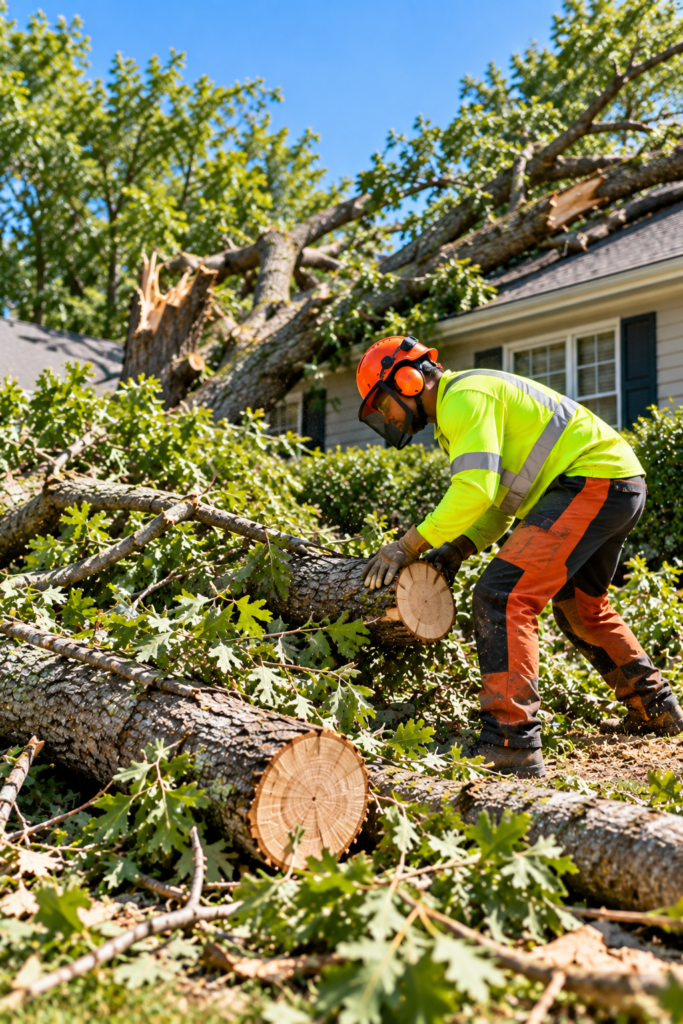
A fully fallen tree may seem like the end of the danger, but it can still hold tension in its trunk and branches, especially if it landed across a roof, vehicle or fence. Removing it safely means working out how its weight is being carried before anything is cut.
Partially fallen trees can be even more dangerous. A tree leaning on a house or caught in a neighboring tree may shift without warning. Trees across a driveway or private road also become urgent when they block access for your household or emergency vehicles.
Storm-Damaged, Leaning and Root-Damaged Trees
The Missouri Department of Conservation’s guide to tree care after storms advises that trees with split trunks, trees that have lost more than half of their crown, and trees already weakened by disease are generally candidates for removal. It also notes that trees leaning because of root breakage usually do not survive well and can still fall later.
The same guide stresses patience when a tree isn’t an immediate hazard, since many storm-damaged trees only need broken branches removed. In those cases, cutting back the damaged limbs may be enough, and a decision about removal can wait.

What Affects Emergency Tree Removal
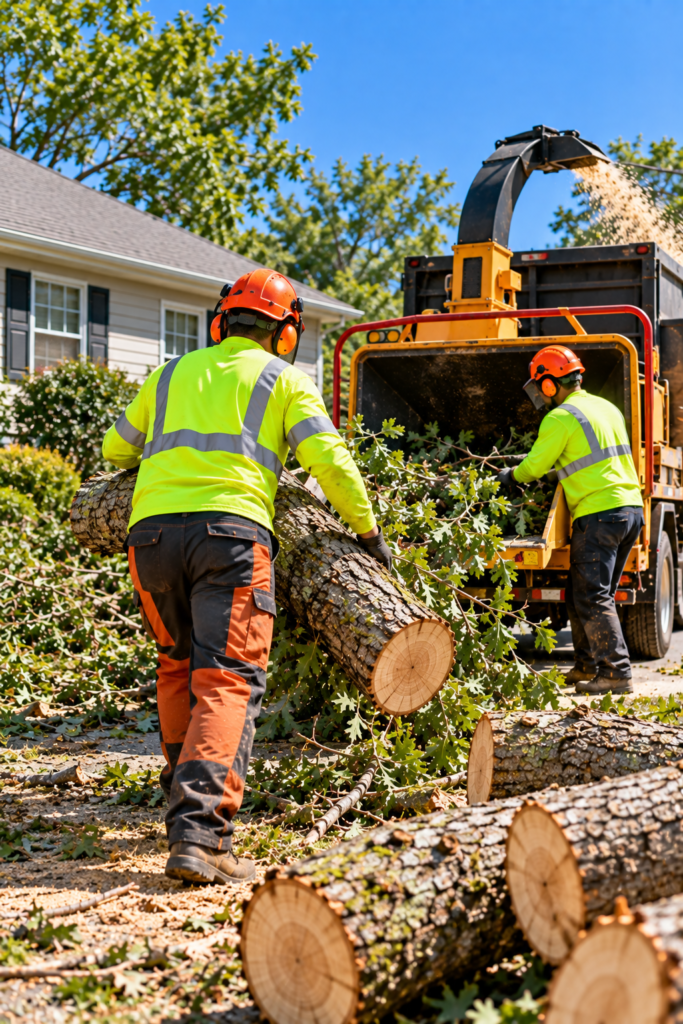
Emergency removals are often more complex than planned work, so costs are best discussed after the situation has been seen. Factors include:
- What the tree is resting on or leaning toward
- How much tension and instability is in the trunk, roots and limbs
- Power lines touching or near the tree
- Access for equipment, which storm debris may block
- The size of the tree and the amount of debris
- Whether cleanup and hauling are included
Photos taken from a safe distance can help explain the situation when you call.
Emergency Removal vs. Routine Removal vs. Emergency Tree Service
Emergency tree removal focuses on taking down a whole tree that has failed or is unstable and threatening people, structures or access.
Emergency tree service is broader. It covers any urgent tree problem, including hanging limbs, broken branches and trees blocking access, and many of those can be resolved without removing the tree.
Planned tree removal is for trees that need to come down but aren’t an immediate hazard. That work can be scheduled and estimated without the pressure of an emergency.
What to Do Around a Dangerous Tree
Keep a safe distance
Keep people and pets well away from an unstable tree, the area it could fall into, and anything it’s resting on. Stay out from under hanging limbs, and avoid rooms beneath a tree on the roof. Don’t try to cut, pull, climb or prop up a damaged tree.
If power lines are involved
Treat any line touching a tree as energized. Don’t touch the tree, the line or anything in contact with them. Liberty Utilities, which provides electric service in the Joplin area, directs customers to call 911 and Liberty at 1-800-206-2300 about downed lines. Tree removal near lines can only begin once the utility has made them safe.
Before work begins
If a home or vehicle is damaged, take photos from a safe distance and contact your insurance company. MDC notes that many homeowner policies cover at least part of tree removal when structural damage has occurred, and it warns about door-to-door workers who appear after storms. After the June 2026 storm, the City of Joplin also stated that its crews could not enter private property to cut up or remove trees, so removal on private property needs to be arranged by the owner.
Related Tree Services
After an emergency removal, the stump is usually left behind, and other trees on the property may need attention too. See the full range of our tree services in Joplin.
Emergency Tree Removal FAQs
Usually when a tree has fallen, split or become unstable and threatens people, structures or access. A professional assessment helps confirm whether removal is needed or whether other work will make the tree safe.
No. Many trees recover once broken branches are removed. Removal is generally considered when the trunk is split, much of the crown is lost, or the roots have failed.
Keep everyone out of the area it could fall into and don’t try to cut, pull or brace it. If power lines are nearby, call 911 and the utility. Then call to have the tree assessed.
Keep clear, check for power lines from a distance, and call 911 if anyone is hurt or lines are down. Take photos from a safe distance, contact your insurance company if there’s damage, then call about removal.
It depends. Many trees lean naturally. A sudden lean after a storm, especially with lifted soil or torn roots, can indicate root damage, and such trees often don’t recover well. An assessment is needed to decide.
Stay away and don’t touch the tree or the line. Call 911 and Liberty Utilities at 1-800-206-2300. Tree work can only begin after the utility has made the area safe.
Emergency tree service covers any urgent tree problem, from hanging limbs to blocked driveways. Emergency tree removal is focused on taking down a whole tree that has failed or is unstable.
Is a Tree Threatening Your Home or Property?
Keep clear of the tree, call 911 and the utility if power lines are involved, then call to describe the situation.
Get Quick Estimate
Copyright 2024 | All RIghts Reserved