- (417) 674-4531
- info@treeservicejoplinmo.com
- Mon - Fri: 9:00 - 18:30
REMOVING TREES TOO DAMAGED TO KEEP
Storm Damage Tree Removal in Joplin, MO
Some trees come through a storm with a few broken branches. Others are left split, uprooted or leaning so badly that they can’t safely stay. Storm damage tree removal is for that second group: trees whose structure has failed or can no longer be relied on after severe weather.
If a storm has left a tree on your Joplin property badly damaged, keep clear of it and call to describe what you’re seeing. If it’s touching power lines, call 911 and the utility first.

When Does Storm Damage Make Removal Necessary?
Removal generally becomes the right choice when a storm has damaged the parts of a tree that hold it together: the trunk, the main branch unions or the roots. It becomes more pressing when that tree stands near a home, driveway, road or area people use.
Situations that often lead to removal include:
- A trunk split down the middle or at a major fork
- A tree that is uprooted or has lifted its root plate
- A tree that lost most of its canopy
- A tree that fell or partly fell onto a structure
Even then, the whole tree should be assessed before deciding. Damage that looks severe from the ground sometimes turns out to be limited to branches.
Severe Trunk and Structural Damage
The trunk carries the weight of the entire tree. A long split, a deep crack, or a major branch union torn apart can leave a tree with little structural strength, even if it’s still standing and in leaf.
Heavy canopy loss matters too. When a large share of the crown is broken away, the tree has fewer leaves to recover with, and the remaining limbs may be unbalanced. Structural damage like this is one of the most common reasons storm-damaged trees can’t be kept safely.

Fallen and Partially Fallen Trees
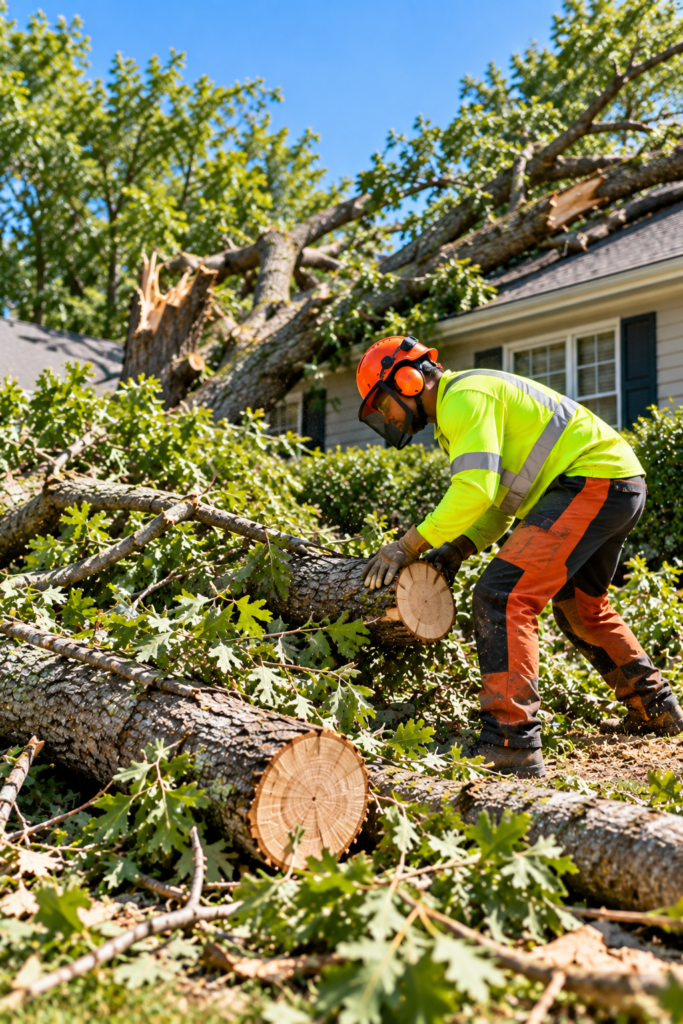
A tree that has fallen completely still needs to be cut up and removed carefully, especially if it landed on a roof, fence, vehicle or another tree. Its weight and any tension in the trunk have to be accounted for before work begins.
Partially fallen trees, hung up in a neighboring tree or resting against a building, are often more hazardous and can shift without warning. When a tree threatens a home or blocks access right now, it’s a case for emergency tree removal. Otherwise, removal can be planned once the storm has passed.
Leaning Trees and Root Damage After Storms
A lean alone doesn’t mean a tree must come down. Many trees grow at an angle and stay stable for decades. What matters after a storm is whether the lean is new and whether the roots were disturbed.
Soil heaving on one side, cracked ground around the base, exposed or torn roots, or a lean that keeps increasing may indicate root damage. A tree that has been partly uprooted often can’t regain its anchorage. These signs call for a closer assessment rather than a snap decision, and they’re also reasons to keep people and vehicles well clear.

What Affects Storm Damage Tree Removal
Storm removals are often more complex than routine work, so an accurate estimate usually depends on seeing the tree. Factors include:
- What the tree is resting on or leaning toward
- Tension in split trunks and bent limbs
- Power lines touching or near the tree
- Debris blocking driveways, gates or equipment access
- How many trees on the property were damaged
- Whether cleanup, hauling and stump work are included
Removal or Corrective Pruning?
Not every storm-damaged tree needs to come down. The University of Arkansas Cooperative Extension’s guide to storm-damaged trees sorts damage by severity. Trees with less than a quarter of the crown damaged and a lean under 45 degrees are generally minor cases. Trees that have lost more than half the crown or are bent past 45 degrees are severe, and a split trunk is considered catastrophic. The guide also notes that trees with broken tops can often survive if four or more living limbs remain.
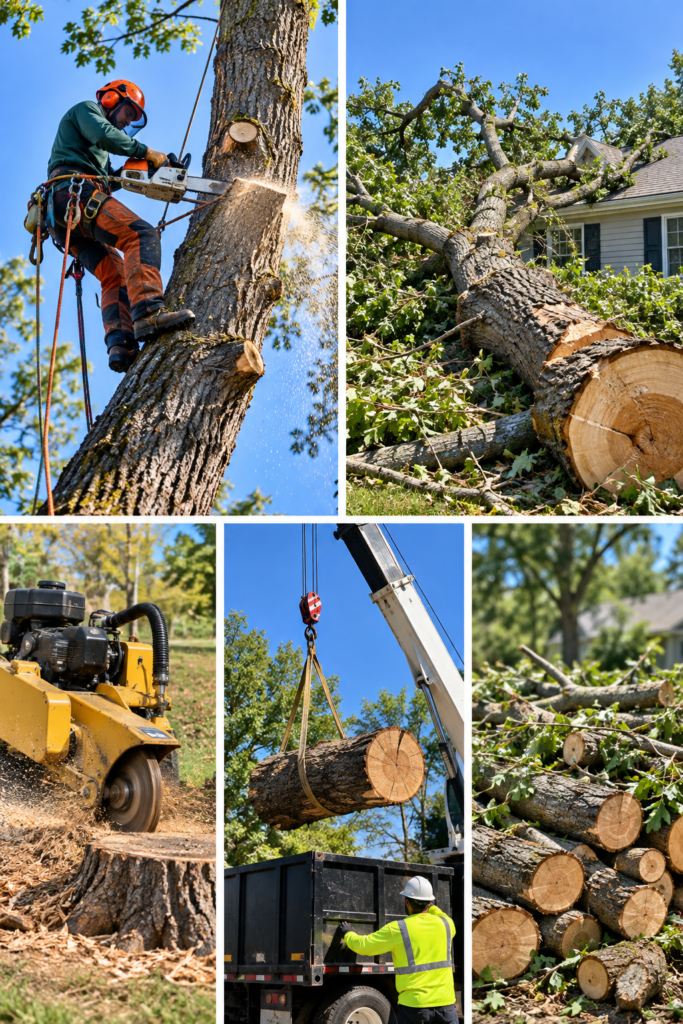
When damage is limited and the trunk and roots are sound, corrective pruning and monitoring may be enough. That kind of assessment and follow-up care is covered by our storm damage tree service. When a tree clearly can’t be kept but isn’t an immediate hazard, it can be handled as scheduled tree removal.
After a Storm-Damaged Tree Comes Down
Storm cleanup
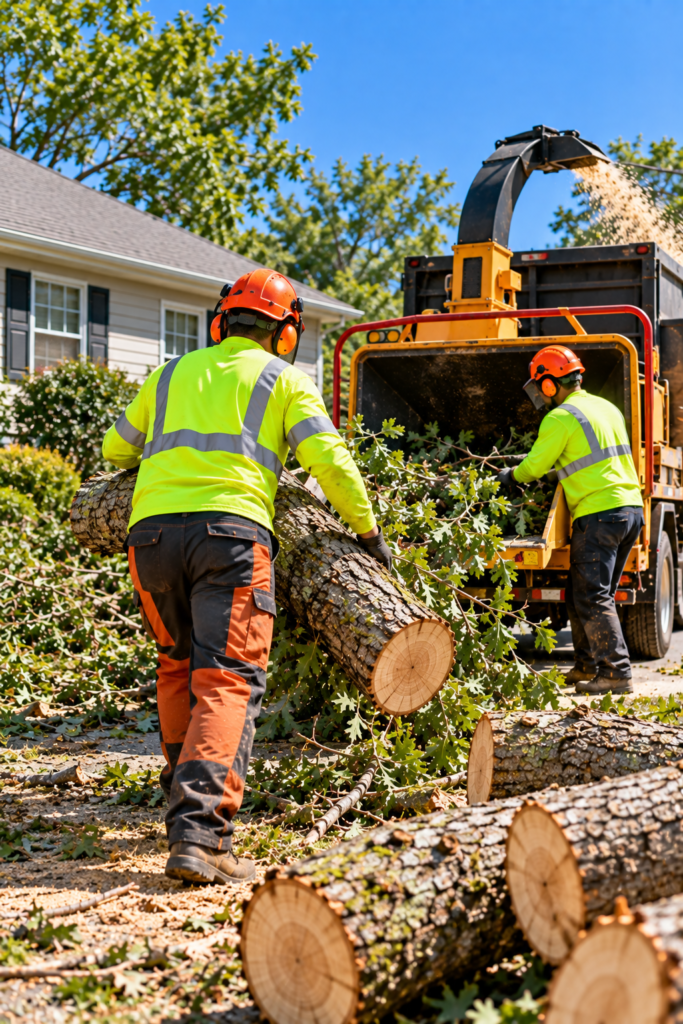
Removing a storm-damaged tree usually leaves a lot of wood and branches. Whether that material is chipped, hauled away or left on site should be part of the agreed scope. After larger storms, the City of Joplin has offered curbside pickup of limbs, but it has also said its crews do not enter private property to cut up or remove trees, so check the City’s current guidance before stacking debris at the curb.
What happens to the stump
Removal typically leaves a stump behind. It can stay in place, or stump grinding can take it down below ground level so the area can be replanted or turned back into lawn.
Staying safe until removal
Keep people, pets and vehicles away from the damaged tree and anything it’s resting on, and don’t try to cut, pull or climb it. If it touches a power line, treat the line as energized and don’t touch the tree or the line. Liberty Utilities, which serves the Joplin area, directs customers to call 911 and Liberty at 1-800-206-2300 about downed lines. If a home or vehicle is damaged, take photos from a safe distance and check your own insurance policy.
Related Tree Services
Storm removal is often one part of recovery. Other trees may need damaged branches cut back, and stumps may need grinding. See the full range of our tree services in Joplin.
Storm Damage Tree Removal FAQs
Removal is generally considered when the trunk is split, most of the crown is lost, the tree is uprooted or its roots are badly damaged, or it has fallen onto a structure. An assessment of the whole tree should come first.
Often. Trees with limited branch damage and sound trunks and roots can usually recover with corrective pruning and time.
No. Many trees lean naturally. A new lean with lifted soil or exposed roots may indicate root damage and needs an assessment before deciding.
Keep everyone well away from it and anything it’s resting on, don’t try to pull or cut it, and check for power lines from a distance. Then call to describe the situation.
Stay clear and don’t touch the tree or the line. Call 911 and Liberty Utilities at 1-800-206-2300. Removal can only begin after the utility makes the area safe.
Unless grinding is part of the agreed scope, the stump is usually left in place. Stump grinding can take it below ground level so the area can be reused.
They overlap. Emergency tree removal covers any tree that urgently needs to come down, whatever the cause. Storm damage tree removal focuses on trees too damaged by a storm to keep, which can often be planned once the immediate danger has passed.
Storm Left a Tree Too Damaged to Keep?
Call to describe the damage and request a storm damage tree removal estimate.
Get Quick Estimate
Copyright 2024 | All RIghts Reserved